Quick Facts
Born: 19 September 1938, Warsaw, Poland
Died: Not applicable — Zygmunt Krauze is living as of July 2026.
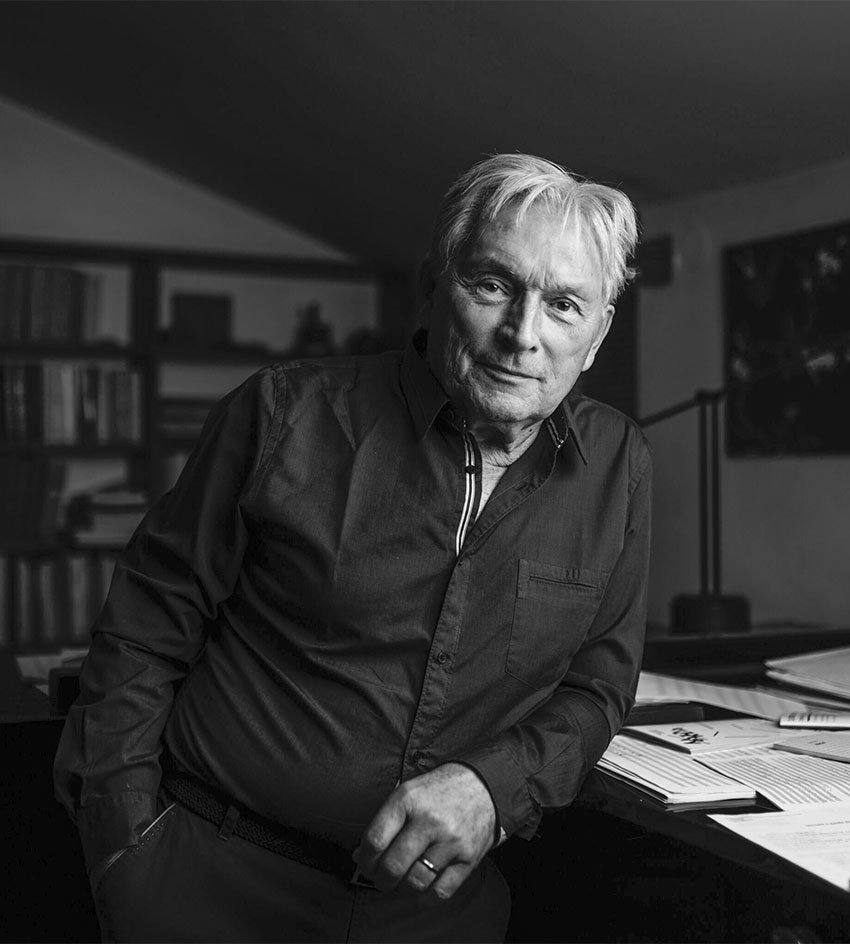
Life and Musical Career
Zygmunt Krauze is a Polish composer, pianist, educator and organiser of contemporary musical life. He is recognised as one of the most original figures in post-war Polish music, particularly for developing a distinctive style known as unistic, or unitary, music.
Krauze studied piano with Maria Wiłkomirska and composition with Kazimierz Sikorski at the State Higher School of Music in Warsaw, graduating in piano in 1962 and composition in 1964. From 1966 to 1967, he continued his studies in Paris with the renowned teacher Nadia Boulanger. In 1966, he received first prize at the Gaudeamus International Competition for performers of contemporary music.
In 1967, Krauze founded the Warsztat Muzyczny, or Music Workshop, an ensemble specialising in contemporary music. He directed the group for 25 years, and more than 100 compositions were written for it by Polish and international composers. As a pianist, Krauze has performed contemporary repertoire across Europe, the Americas and Asia.
His concept of unistic music was inspired by the paintings and artistic theories of Polish artist Władysław Strzemiński. In these compositions, the complete range of musical material is introduced at the beginning and developed without dramatic contrasts or conventional climaxes. Krauze also pioneered spatial musical compositions presented in specially designed architectural environments. His later music often became more expressive, drawing on historical forms, quotations and personal reflection.
Krauze has composed ten operas and more than 100 orchestral, chamber and solo works. He has taught internationally, served as an artistic adviser at IRCAM in Paris and was president of the International Society for Contemporary Music. His honours include France’s Legion of Honour and Poland’s Gold Medal for Merit to Culture.
Three of his most important compositions are:
Polychromy (1968) – an early chamber work demonstrating Krauze’s unistic approach through continuous textures and carefully controlled instrumental colours.
Piece for Orchestra No. 1 (1969) – one of the clearest orchestral examples of his unitary style and an important work in post-war Polish music.
The Star (1981) – Krauze’s first opera, marking an important expansion of his musical language into theatre and large-scale vocal composition.
Sources:
Zygmunt Krauze — Official Biography and Catalogue of Works.
Polish Music Information Centre — Zygmunt Krauze: Biography and Compositions.
Polskie Wydawnictwo Muzyczne — Zygmunt Krauze: Biography.