Quick Facts
Born: 5 July 1879, Warsaw, Poland—then part of the Russian Empire
Died: 16 August 1959, Lakeville, Connecticut, United States
Life and Musical Career
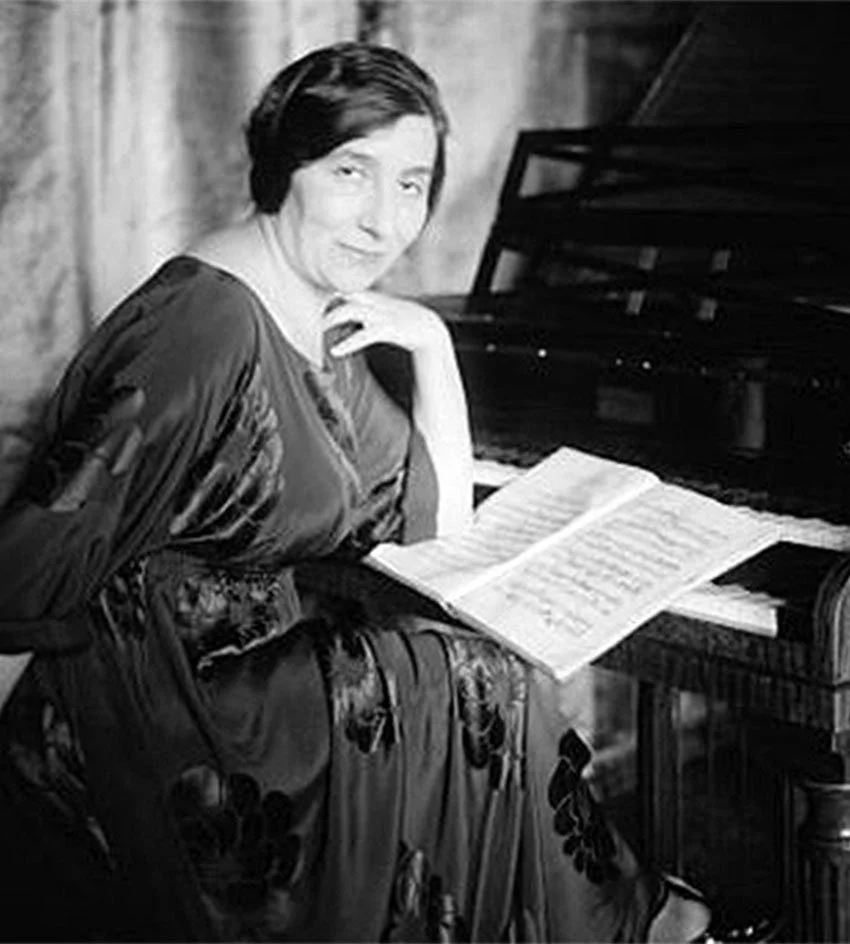
Wanda Landowska was a Polish harpsichordist, pianist, composer, teacher and musicologist. She is remembered primarily as a pioneering performer who played a central role in restoring the harpsichord to international concert life during the twentieth century.
Landowska began playing the piano at the age of four. She studied at the Warsaw Conservatory with Jan Kleczyński and Aleksander Michałowski before continuing her education in Berlin, where she studied composition and counterpoint with Heinrich Urban. In 1900, she settled in Paris and increasingly devoted herself to researching early keyboard music and historical instruments.
Believing that Baroque keyboard music should be performed on the instrument for which it was written, Landowska promoted the harpsichord through concerts, lectures, teaching and recordings. She worked with the Pleyel company to develop a modern concert harpsichord capable of filling larger performance spaces. She taught in Paris and Berlin and became one of the first musicians to establish harpsichord performance as a recognised academic discipline.
In 1925, Landowska founded a school of early music at Saint-Leu-la-Forêt near Paris. It became an important international centre for studying and performing Baroque music. During the German occupation of France, her home was seized and her valuable collection of instruments, manuscripts and books was looted. She escaped to the United States in 1941 and later settled in Lakeville, Connecticut, where she continued performing and teaching.
Although Landowska’s greatest influence came through performance and scholarship, she also wrote original music. Three of her most notable compositions are:
Five Polish Folksongs for Harpsichord, Winds and Strings – colourful arrangements inspired by Polish folk traditions and the countryside of her childhood.
Four Pieces for Piano, Op. 2 – an early piano collection demonstrating her training as a composer and keyboard musician.
Liberation Fanfare – written in France in 1940 as a tribute to General Charles de Gaulle and later performed in the United States.
Sources:
Library of Congress — Wanda Landowska and Denise Restout Papers.
Porta Polonica — Wanda Landowska.
Hildegard Publishing Company — Five Polish Folksongs for Harpsichord, Winds and Strings.