Xaver Scharwenka
Quick Facts
Born: 6 January 1850, Szamotuły—then Samter, Kingdom of Prussia, now Poland
Died: 8 December 1924, Berlin, Germany
Life and Musical Career
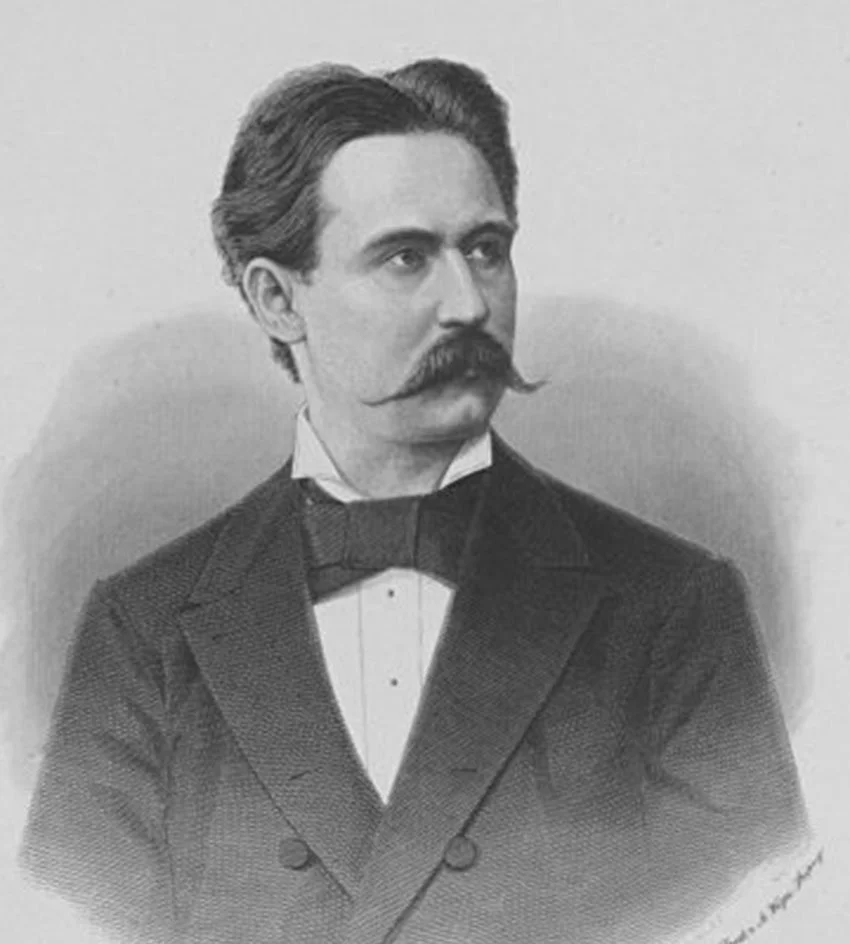
Xaver Scharwenka was a Polish-German composer, virtuoso pianist, conductor and influential music teacher. Born to a German father and Polish mother, he maintained a strong connection to Polish musical traditions throughout his career, particularly through his use of mazurka, oberek, krakowiak and polonaise rhythms.
Scharwenka received his earliest musical instruction from his mother and a local church musician. In 1865, his family moved to Berlin, where he studied piano, composition and counterpoint at Theodor Kullak’s New Academy of Music. His teachers included Kullak, Richard Wüerst and Heinrich Dorn. After completing his studies, he joined the academy’s teaching staff and began building an international reputation as a pianist.
His public debut as a composer, pianist and conductor took place in Berlin in 1869. That same year, his first published collection, Polish Dances, Op. 3, achieved remarkable popularity. Scharwenka later toured extensively across Europe and North America, becoming especially admired for his interpretations of Chopin.
In 1881, he founded the Scharwenka Conservatory in Berlin. A New York branch followed in 1891, which he personally directed for seven years. The Berlin institution later merged with Karl Klindworth’s school to form the Klindworth–Scharwenka Conservatory, one of Germany’s important centres of musical education.
Scharwenka composed four piano concertos, a symphony, chamber music, an opera and numerous works for solo piano. His style combined late-Romantic virtuosity with expressive melodies, colourful harmony and Polish national influences.
Three of his most important compositions are:
Polish Dances, Op. 3 (1869) – a highly successful piano collection inspired by Polish dance rhythms; its first dance became Scharwenka’s most popular composition.
Piano Concerto No. 1 in B-flat Minor, Op. 32 (1876) – the work that established his international reputation as a composer of large-scale concert music.
Piano Concerto No. 4 in F Minor, Op. 82 (1908) – a mature Romantic concerto admired for its dramatic intensity, lyrical passages and demanding piano part.
Sources:
Scharwenka Foundation, Bad Saarow — Chronological Biography of Xaver Scharwenka.
Deutsche Biographie — Theophil Franz Xaver Scharwenka.
Poznań Philharmonic — Xaver Scharwenka: Piano Concerto No. 4 and Polish National Dances.
West Virginia University — The Life and Keyboard Works of Franz Xaver Scharwenka.