Tadeusz Szeligowski
Quick Facts
Born: 13 September 1896, Lwów, Poland—now Lviv, Ukraine
Died: 10 January 1963, Poznań, Poland
Life and Musical Career
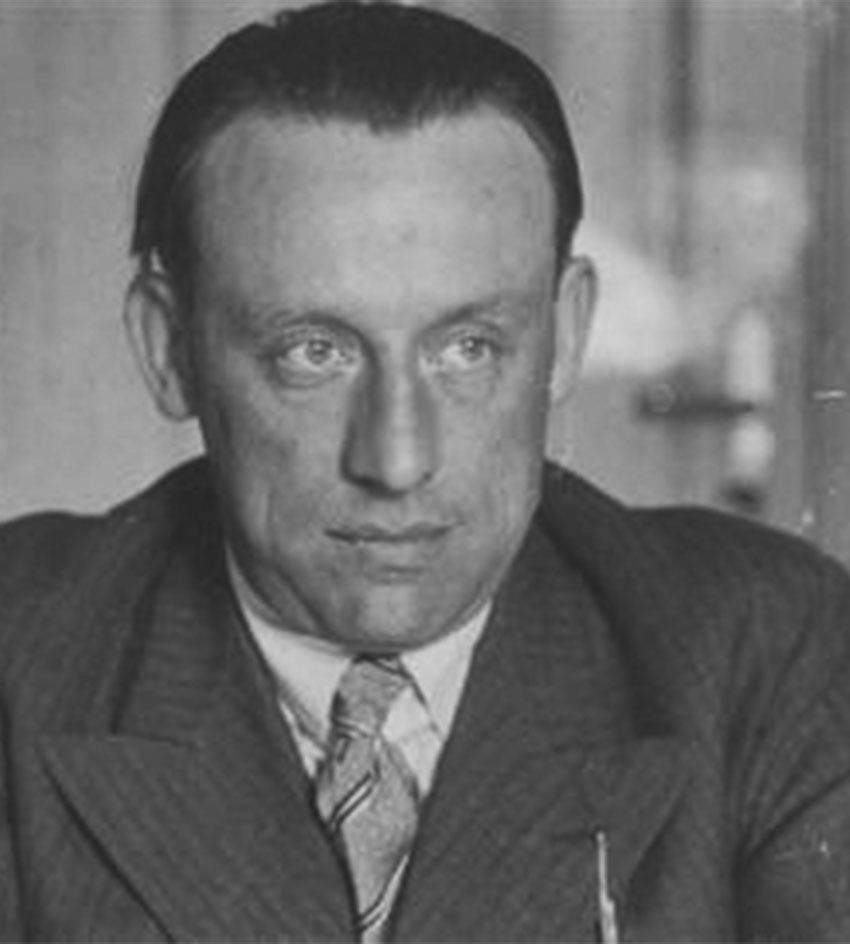
Tadeusz Szeligowski was a Polish composer, teacher, lawyer and organiser of musical life. His stylistically diverse music combined neoclassicism, Polish folk traditions, Renaissance influences, Romantic expression and elements of twentieth-century modernism.
Szeligowski studied piano and music theory at the Conservatory of the Galician Music Society in Lwów. Between 1918 and 1922, he studied law at the Jagiellonian University in Kraków while continuing his musical education in harmony, counterpoint, piano and musicology. He initially worked as a lawyer in Vilnius but gradually devoted himself fully to music.
From 1929 to 1931, Szeligowski studied composition with Nadia Boulanger and instrumentation with Paul Dukas in Paris. After returning to Poland, he taught in Poznań and Vilnius, founded the Pro Arte vocal ensemble and worked to promote musical education and performance. During the Second World War, he served as an organist at St Casimir’s Church in Vilnius.
Following the war, Szeligowski helped rebuild Polish musical institutions. He directed a music school in Lublin, organised the State Higher School of Opera in Poznań and became the first director and artistic director of the Poznań Philharmonic. He later taught composition in Poznań and Warsaw, educating composers including Zygmunt Krauze, Włodzimierz Kotoński and Augustyn Bloch. He also served as president of the Polish Composers’ Union and helped establish the Poznań Musical Spring festival.
Three of his most important compositions are:
Epitaph on the Death of Karol Szymanowski (1937) – an expressive work for string orchestra written in memory of one of Poland’s greatest composers.
Lublin Wedding (1948) – a colourful vocal-orchestral composition inspired by folk songs and wedding traditions from the Lublin region.
The Scholars’ Revolt (1951) – a four-act opera that received Poland’s First Degree State Prize and became one of Szeligowski’s most important theatrical achievements.
Sources:
Polskie Wydawnictwo Muzyczne — Tadeusz Szeligowski: Biography.
Culture.pl, Adam Mickiewicz Institute — Tadeusz Szeligowski: Biography and Works.
Polish Music Information Centre — Tadeusz Szeligowski: Biography and Compositions.
Polish Music Library — Tadeusz Szeligowski.