Quick Facts
Born: 23 May 1851, Puławy, Poland
Died: 7 September 1872, Merano, Italy
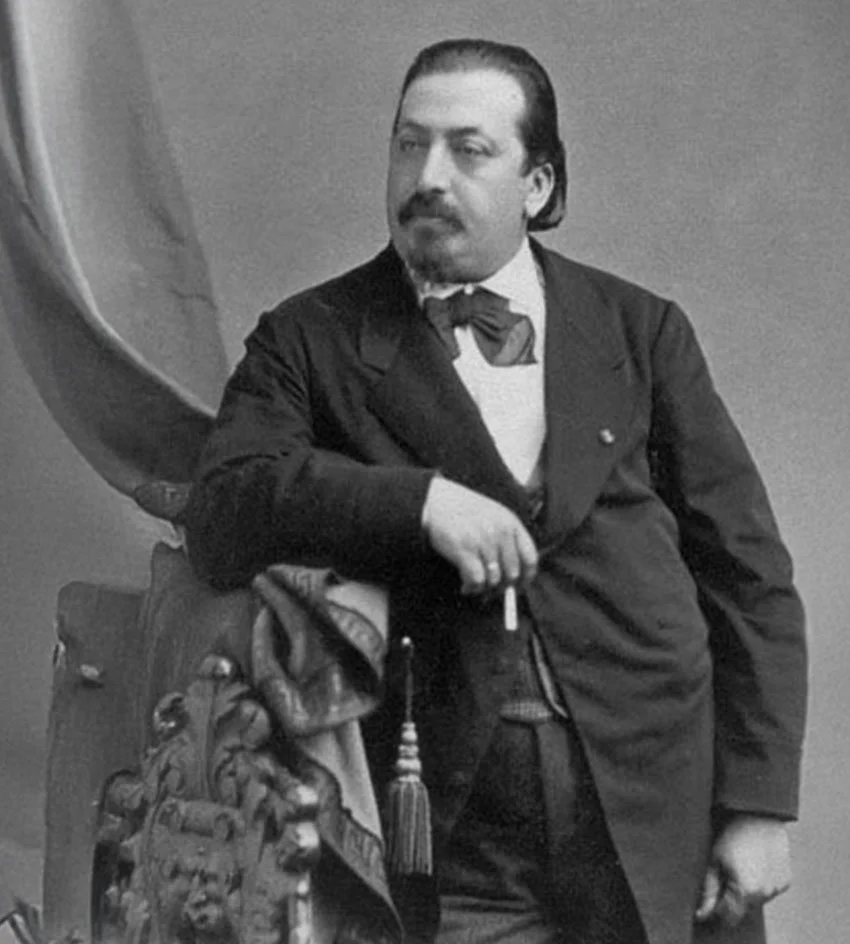
Life and Musical Career
Antoni Stolpe, sometimes identified as Antoni Stolpe the Younger, was a Polish composer, pianist, conductor and teacher. Although he died at only 21, he was considered one of the most promising talents in nineteenth-century Polish music.
Stolpe was born into a musical family. His father, Edward Stolpe, was a pianist, teacher and former student of Józef Elsner, while his mother, Marianna Turowska, had trained as a singer. Antoni received his first piano lessons from his father and entered the Warsaw Institute of Music in 1862. He studied harmony and counterpoint with August Freyer and Stanisław Moniuszko. In 1867, he graduated with the grand prize for piano performance and first prize for progress in counterpoint.
Stolpe made his public debut in Warsaw in July 1867, performing a Chopin étude and his own Mazurka in B Minor. Between 1868 and 1869, he organised concerts featuring his orchestral, chamber, piano and vocal compositions. He appeared as pianist and conductor, receiving enthusiastic reviews for his technical skill and unusual creative maturity.
In 1869, Stolpe travelled to Berlin, where he studied composition with Friedrich Kiel and piano with Theodor Kullak. Kullak was so impressed that he entrusted the young musician with a piano class at the Neue Akademie der Tonkunst. Stolpe’s studies were interrupted by serious illness. After developing pneumonia and tuberculosis, he returned to Warsaw and later travelled to Merano for treatment, where he died in 1872.
Stolpe composed approximately 60 works. His music united Polish traditions and Chopin’s influence with the Romantic styles of Schumann, Mendelssohn and Wagner. Three of his most important compositions are:
Piano Sonata in D Minor – his best-known piano work and one of the few compositions published shortly after his death.
Piano Sextet in E Minor – a substantial chamber composition demonstrating his mature understanding of instrumental form and texture.
Dramatic Scene in A Minor – an expressive work for cello and string quintet, also existing in a version for cello and orchestra.
Sources:
Polish Music Library — Antoni Stolpe the Younger: Biography and Works.
Polish Music Heritage — Antoni Stolpe: Complete Biography.
Culture.pl, Adam Mickiewicz Institute — Antoni Stolpe: Life and Work.
Antoni Stolpe: A Forgotten Composer — biography and catalogue of works.