Władysław Szpilman
Quick Facts
Born: 5 December 1911, Sosnowiec, Poland—then part of the Russian Empire
Died: 6 July 2000, Warsaw, Poland
Life and Musical Career
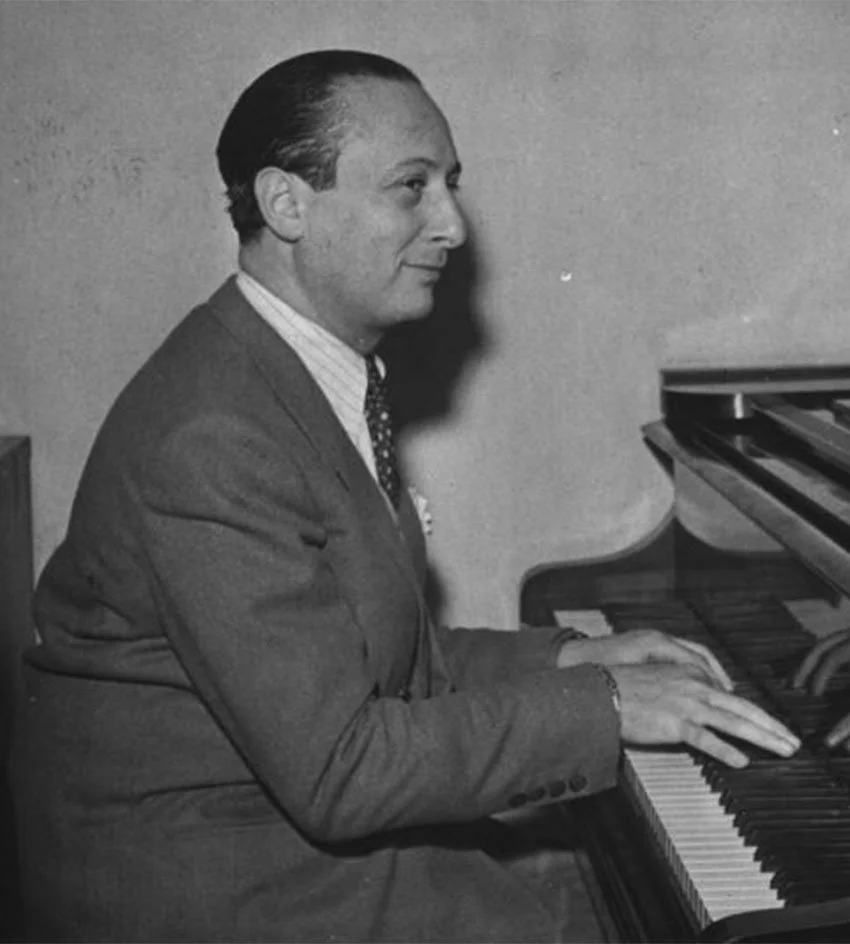
Władysław Szpilman was a Polish-Jewish pianist, composer, arranger and author. He became an important figure in Polish musical life and is internationally remembered for his survival during the Holocaust, later described in his memoir The Pianist.
Szpilman studied piano, music theory and counterpoint at the Fryderyk Chopin Higher School of Music in Warsaw between 1926 and 1930. He continued his education at the Academy of Arts in Berlin, studying piano with Leonid Kreutzer and Artur Schnabel and composition with Franz Schreker. After returning to Warsaw, he studied with the distinguished Polish pianist Aleksander Michałowski.
In 1935, Szpilman joined Polish Radio as a pianist, chamber musician, accompanist and composer. Following the German occupation of Poland, he was imprisoned in the Warsaw Ghetto, where he performed in cafés and concert halls to help support his family. He escaped deportation to Treblinka, fled the ghetto in 1943 and survived the remainder of the war in hiding. German officer Wilm Hosenfeld discovered him among Warsaw’s ruins and secretly provided him with food.
After the war, Szpilman returned to Polish Radio and directed its Light Music Department until 1963. He resumed his performing career, established the Warsaw Piano Quintet and helped organise the first Sopot International Song Festival in 1961. He composed orchestral works, piano pieces, film and theatre scores, children’s music and approximately 500 popular songs, around 150 of which became hits.
Three of his most important compositions are:
The Life of Machines (1931) – an imaginative suite for piano reflecting the rhythms, energy and mechanical character of modern industrial life.
Concertino for Piano and Orchestra (1940) – one of Szpilman’s principal concert works, composed during the early years of the German occupation.
In a Little Cinema (W małym kinie) – one of his best-known popular songs, with lyrics by Ludwik Starski, remembered for its nostalgic melody and intimate atmosphere.
Sources:
Culture.pl, Adam Mickiewicz Institute — Władysław Szpilman: Biography and Major Works.
Boosey & Hawkes — Władysław Szpilman: Concertino for Piano and Orchestra.
Polish Music Center, University of Southern California — articles on Szpilman’s compositions, recordings and songs.