Quick Facts
Born: 25 January 1913, Warsaw, Poland
Died: 7 February 1994, Warsaw, Poland
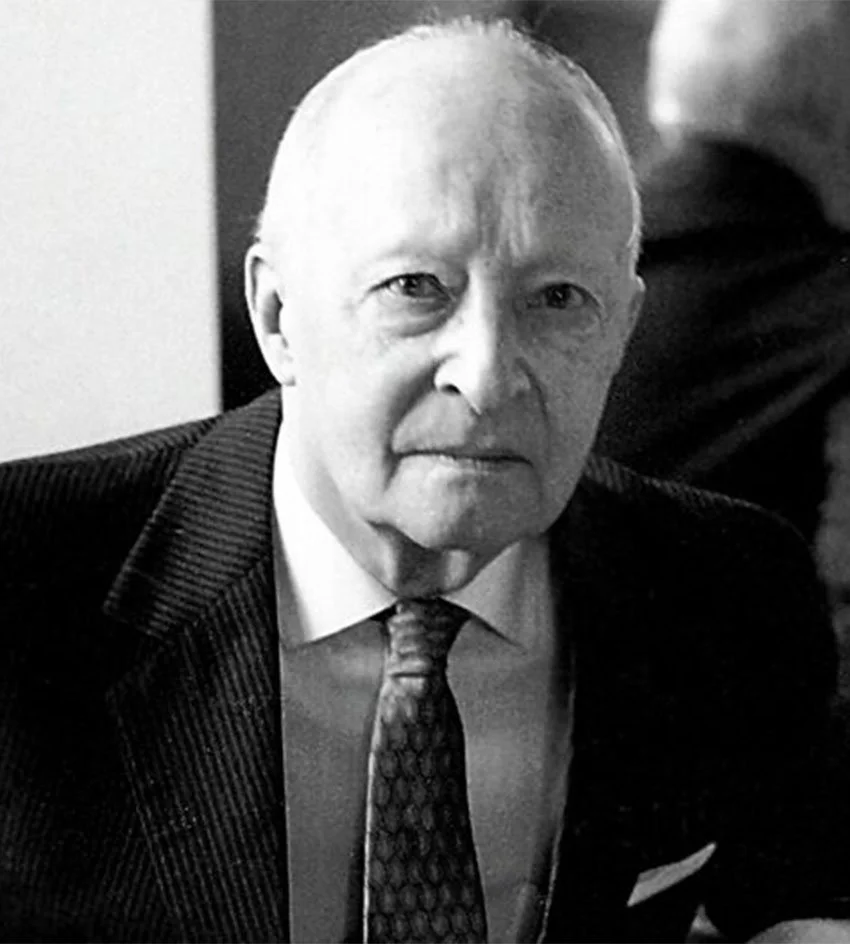
Life and Musical Career
Witold Lutosławski was a Polish composer, conductor and pianist, widely regarded as one of the most important European composers of the twentieth century. His innovative approach to harmony, orchestration, musical form and controlled chance created a distinctive style that influenced generations of composers.
Lutosławski began studying piano and violin as a child. He later studied mathematics at the University of Warsaw and composition with Witold Maliszewski at the Warsaw Conservatory, graduating in 1937. His early musical education gave him both a strong knowledge of traditional forms and an interest in carefully organised musical structures.
During the German invasion of Poland in 1939, Lutosławski served in the military. He was captured but escaped and returned to Warsaw. During the occupation, he earned a living by performing piano duets with composer Andrzej Panufnik in cafés. Most of his early compositions were destroyed during the Warsaw Uprising of 1944.
After the Second World War, Lutosławski initially drew inspiration from Polish folk music. During the 1950s and 1960s, his musical language became increasingly individual and experimental. He developed a technique known as controlled aleatoricism, in which performers play certain passages independently while the composer continues to control the notes, structure and overall musical result. This method allowed him to create flexible rhythms and complex orchestral textures.
Lutosławski composed four symphonies, concertos, orchestral song cycles and numerous chamber and instrumental works. He also conducted his own music internationally and received many prestigious honours.
Three of his most important compositions are:
Concerto for Orchestra (1950–1954) – a brilliant orchestral work combining Polish folk melodies with rich instrumentation, rhythmic energy and large-scale symphonic form.
Venetian Games (1961) – a groundbreaking composition that introduced Lutosławski’s controlled aleatoric technique and marked a major development in his mature style.
Symphony No. 3 (1972–1983) – one of his greatest achievements, admired for its dramatic structure, orchestral colour and powerful contrast between freedom and precise organisation.
Sources:
The Witold Lutosławski Society — Witold Lutosławski: Biography.
Polskie Wydawnictwo Muzyczne — Witold Lutosławski: Biography.
Polish Music Center, University of Southern California — Witold Lutosławski: Biography and List of Works.
Polish Music Information Centre — Witold Lutosławski.