Quick Facts
Born: Around 1780, Warsaw, Poland
Died: 26 December 1838, Piotrków Trybunalski, Poland
Lessel’s precise date of birth is unknown. Some older sources also associate his birthplace with Puławy, where he spent his early childhood.
Life and Musical Career
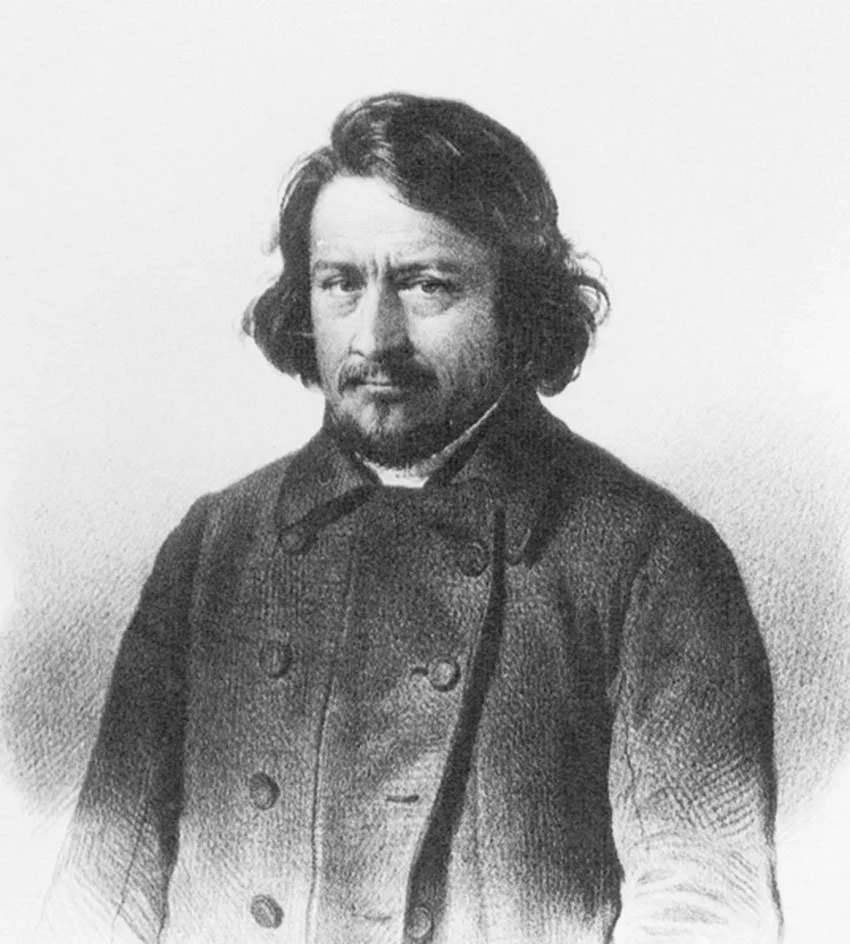
Franciszek Lessel was a Polish composer and pianist whose music represents an important connection between Viennese Classicism and the emerging Polish national style of the early nineteenth century.
He received his first music lessons from his father, Wincenty Ferdynand Lessel, a composer, pianist and teacher of Czech origin who worked for the Czartoryski family. Lessel spent his early years in Puławy, where his father introduced him to keyboard playing, composition and music theory.
In late 1799, Lessel travelled to Vienna and became a student of Joseph Haydn. He remained connected with the celebrated composer until Haydn’s death in 1809. During his years in Vienna, Lessel developed a strong understanding of Classical forms, including the sonata, rondo and variation. He also returned to Poland periodically and worked as a court musician for the Lubomirski family in Łańcut.
After returning permanently to Poland in 1809, Lessel performed his own piano compositions in Kraków and at Warsaw’s National Theatre. He also played the glass harmonica, taught music and briefly directed the Warsaw Amateur Music Society. Although he later worked mainly as an estate administrator and school inspector, he continued composing throughout his life.
Lessel wrote symphonies, concertos, chamber music, piano compositions, religious works and songs. His style combined Classical balance and formal clarity with Polish dance rhythms, expressive melodies and elements of early Romanticism.
Three of his most important compositions are:
Piano Concerto in C Major, Op. 14 – one of Lessel’s finest surviving works, combining brilliant piano writing with the formal elegance of the Viennese Classical tradition.
Overture à Grand Orchestre in C Major, Op. 10 – considered the first Polish concert overture and an important early nineteenth-century orchestral work.
Fantaisie caractéristique, Op. 31 (1822) – a substantial chamber composition for piano, violin, viola and cello, demonstrating Lessel’s expressive and imaginative mature style.
Sources:
Culture.pl, Adam Mickiewicz Institute — Franciszek Lessel: Biography.
International Competition of Polish Music, National Institute of Music and Dance — Franciszek Lessel.
Institute of Musicology, University of Warsaw — Franciszek Lessel’s Ouverture à Grand Orchestre, Op. 10.