Quick Facts
Born: 6 July 1929, Łódź, Poland
Died: 4 March 1999, Bora Bora, French Polynesia
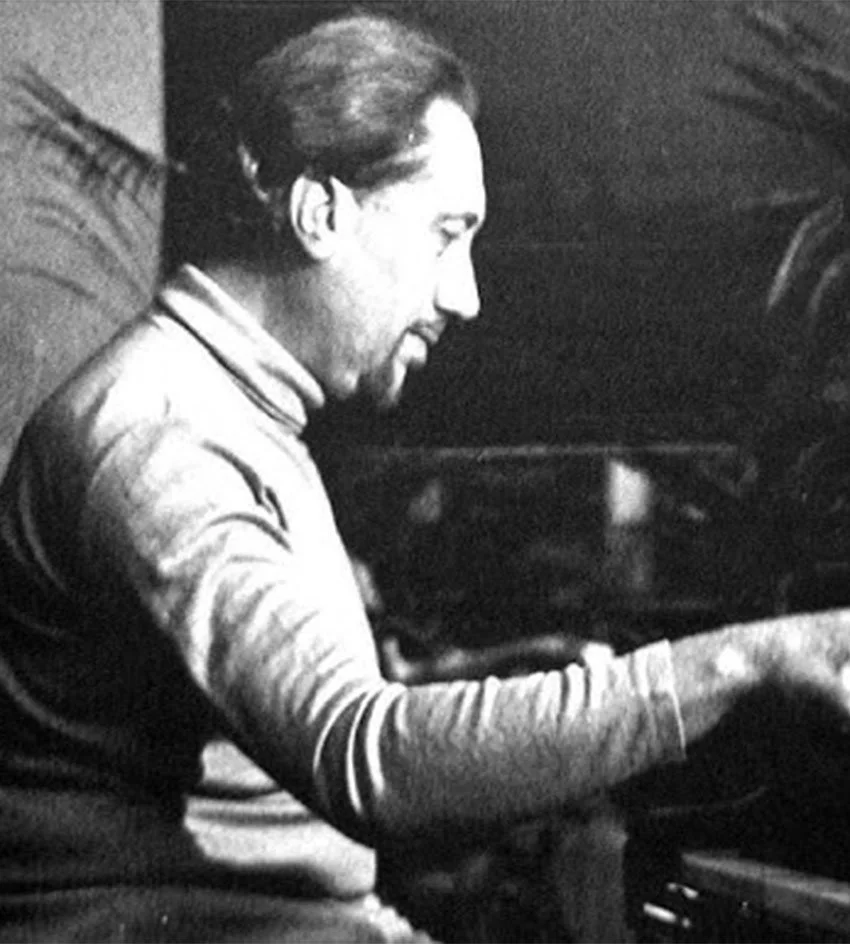
Life and Musical Career
Miłosz Magin was a Polish composer, pianist, conductor and teacher whose music combined lyrical expression, modern harmony and a strong attachment to Polish musical traditions.
After beginning his studies in Łódź, Magin attended the State Higher School of Music in Warsaw. He studied piano with Margerita Trombini-Kazuro, graduating in 1953, and composition with Jan Adam Maklakiewicz and Kazimierz Sikorski, completing his degree in 1957. In 1955, he received an honourable mention at the Fifth International Fryderyk Chopin Piano Competition. Two years later, he won prizes at the Long–Thibaud Competition in Paris and the Vianna da Motta Competition in Lisbon.
Magin left Poland in 1957, lived briefly in London and settled permanently in Paris in 1960. He developed an international career as a pianist, but a serious car accident in 1963 fractured his left wrist and temporarily interrupted his performing activities. Through intensive rehabilitation, he rebuilt his technique and later recorded the complete piano works of Chopin for Decca.
As a composer, Magin wrote piano concertos, symphonies, chamber music, instrumental concertos, ballets and numerous solo piano pieces. His generally tonal style incorporated expressive melodies, carefully controlled dissonance and rhythms inspired by Polish dances. He also taught piano in Paris and founded the International Miłosz Magin Piano Competition in 1985 to promote musical expression and support young performers.
Three of his most important compositions are:
Stabat Mater for Strings and Timpani – a restrained and deeply spiritual work characterised by emotional intensity and solemn orchestral writing.
Polish Triptych (1967) – a three-part piano suite inspired by Polish dance traditions and concluding with an energetic Oberek.
Piano Concerto No. 3 for Piano, String Orchestra and Percussion – a major concert work demonstrating Magin’s lyrical piano writing, rhythmic vitality and distinctive use of instrumental colour.
Magin died from a heart attack while visiting Bora Bora for a concert. He was buried at Père-Lachaise Cemetery in Paris, near the grave of Fryderyk Chopin.
Sources:
International Competition of Polish Music, National Institute of Music and Dance — Miłosz Magin: Biography and Works.
Sony Classical — Żal: The Music of Miłosz Magin.
The Independent — Obituary: Miłosz Magin.