Quick Facts
Born: 11 December 1876, Wiszniewo—now Vishnyeva, Belarus
Died: 8 February 1909, Tatra Mountains near Zakopane, Poland
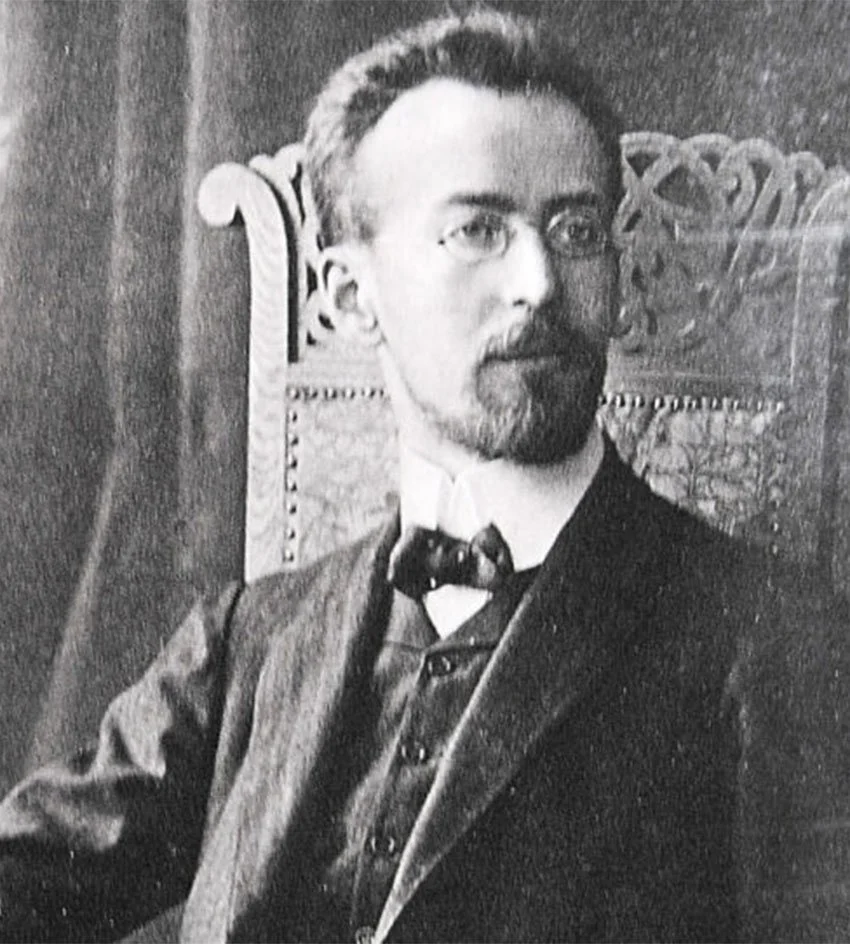
Life and Musical Career
Mieczysław Karłowicz was a Polish composer and conductor and one of the leading representatives of late-Romantic music in Poland. He was also an accomplished photographer, writer, skier and mountaineer whose love of nature strongly influenced his artistic imagination.
Born into an educated and musical family, Karłowicz spent part of his childhood in Heidelberg, Prague and Dresden before settling in Warsaw in 1887. He began studying violin at the age of seven and later received lessons in harmony, counterpoint and musical form. In 1895, he moved to Berlin, where he studied composition with Heinrich Urban and attended university lectures in music history, philosophy, psychology and physics.
After completing his studies, Karłowicz returned to Warsaw and became actively involved in the city’s musical life. He served on the board of the Warsaw Music Society and helped organise and conduct its symphony orchestra. His early compositions included songs, orchestral works, a symphony and a violin concerto. From 1904 onwards, he concentrated primarily on symphonic poems, which became the most important part of his musical legacy.
Karłowicz’s music is characterised by rich orchestration, sweeping melodies and an atmosphere of melancholy, longing and dramatic intensity. Influenced by Richard Wagner, Richard Strauss and Pyotr Tchaikovsky, he developed an individual style that connected Polish music with the broader European late-Romantic tradition. Although he left only fourteen numbered works, he is regarded as one of Poland’s finest symphonic composers.
In 1906, Karłowicz settled in Zakopane, where he pursued his passion for the Tatra Mountains. On 8 February 1909, at the age of 32, he was killed by an avalanche during a solitary skiing expedition. His final symphonic poem was completed after his death by conductor Grzegorz Fitelberg.
Three of his most important compositions are:
Violin Concerto in A Major, Op. 8 (1902) – a lyrical and technically demanding concerto combining virtuoso solo writing with colourful orchestration.
Eternal Songs, Op. 10 (1904–1906) – a three-part symphonic poem exploring longing, love, death and humanity’s relationship with the universe.
A Sorrowful Tale, Op. 13 (1908) – an intensely dramatic symphonic poem and one of the finest examples of Karłowicz’s mature orchestral style.
Sources:
Polskie Wydawnictwo Muzyczne — Mieczysław Karłowicz: Biography.
Culture.pl, Adam Mickiewicz Institute — Mieczysław Karłowicz: Biography.
Polish Music Center, University of Southern California — Mieczysław Karłowicz: Biography and List of Works.