Quick Facts
Born: 6 December 1933, Czernica near Rybnik, Poland
Died: 12 November 2010, Katowice, Poland
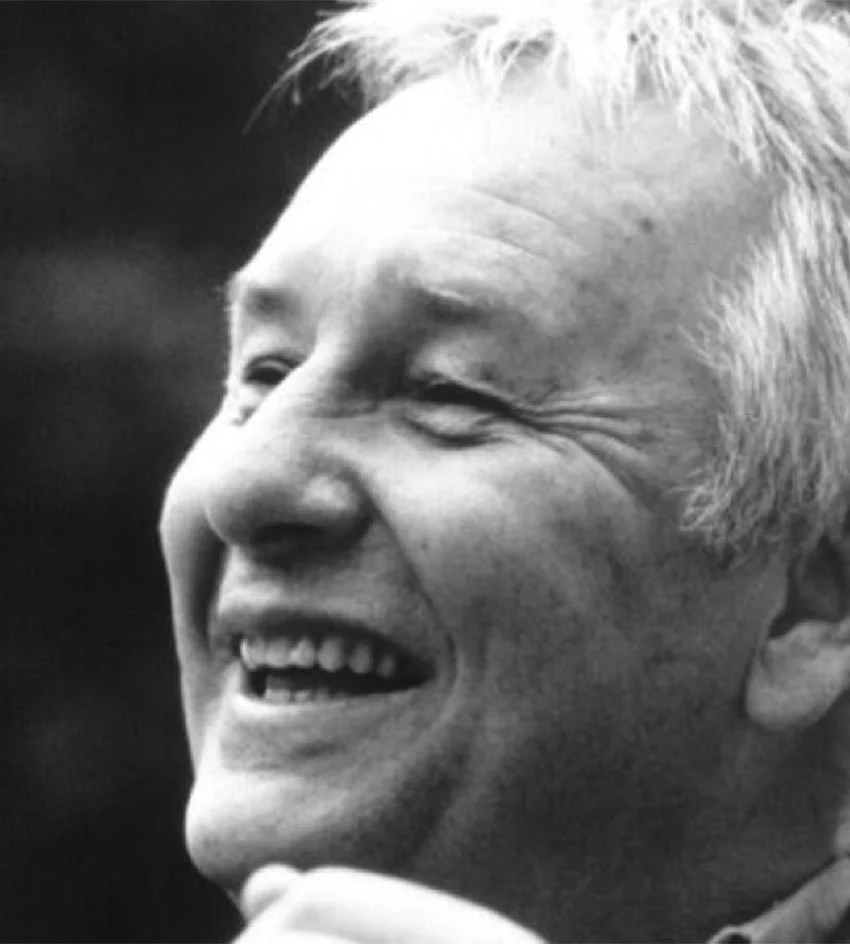
Life and Musical Career
Henryk Mikołaj Górecki was one of the most internationally recognised Polish composers of the twentieth century. His music developed from the experimental techniques of the post-war avant-garde towards a simpler, deeply emotional style inspired by spirituality, Polish folk traditions and early sacred music.
Górecki began his formal musical education in 1952 at the Music High School in Rybnik. From 1955 to 1960, he studied composition with Bolesław Szabelski at the State Higher School of Music in Katowice. In 1958, the institution presented a concert devoted entirely to Górecki’s compositions—the first student composer concert of its kind in the school’s history.
During the 1960s, Górecki became a leading figure in the Polish musical avant-garde. His early works used dissonance, unusual instrumental combinations, sharp contrasts and dense masses of sound. Over time, however, his musical language became increasingly direct and restrained. Repetition, sustained harmonies, religious texts and references to Polish musical traditions became central features of his mature compositions.
Górecki later taught composition at the State Higher School of Music in Katowice and served as its rector from 1975 to 1979. He composed approximately 100 works, including symphonies, choral compositions, chamber music and works for solo instruments.
His international reputation grew dramatically in 1992, when a recording of his Symphony No. 3, performed by soprano Dawn Upshaw and the London Sinfonietta under David Zinman, became an unexpected worldwide success. Its emotional intensity attracted listeners far beyond traditional classical music audiences.
Three of his most important compositions are:
Symphony No. 3, “Symphony of Sorrowful Songs”, Op. 36 (1976) – a deeply moving work for soprano and orchestra exploring separation, motherhood, suffering and loss.
Scontri, Op. 17 (1960) – a radical orchestral composition that established Górecki as a major representative of the Polish avant-garde.
Beatus Vir, Op. 38 (1979) – a monumental psalm for baritone, choir and orchestra, dedicated to Pope John Paul II and premiered during his visit to Poland.
Sources:
Polskie Wydawnictwo Muzyczne — Henryk Mikołaj Górecki: Biography.
Culture.pl, Adam Mickiewicz Institute — Henryk Mikołaj Górecki: Biography.
Polish Music Center, University of Southern California — Henryk Mikołaj Górecki.
Polish Music Library — Górecki, Henryk Mikołaj: Biography and Works.