Quick Facts
Born: 25 February 1807, Romanów, Volhynia—now Romaniv, Ukraine
Died: 9 October 1867, Warsaw, Poland
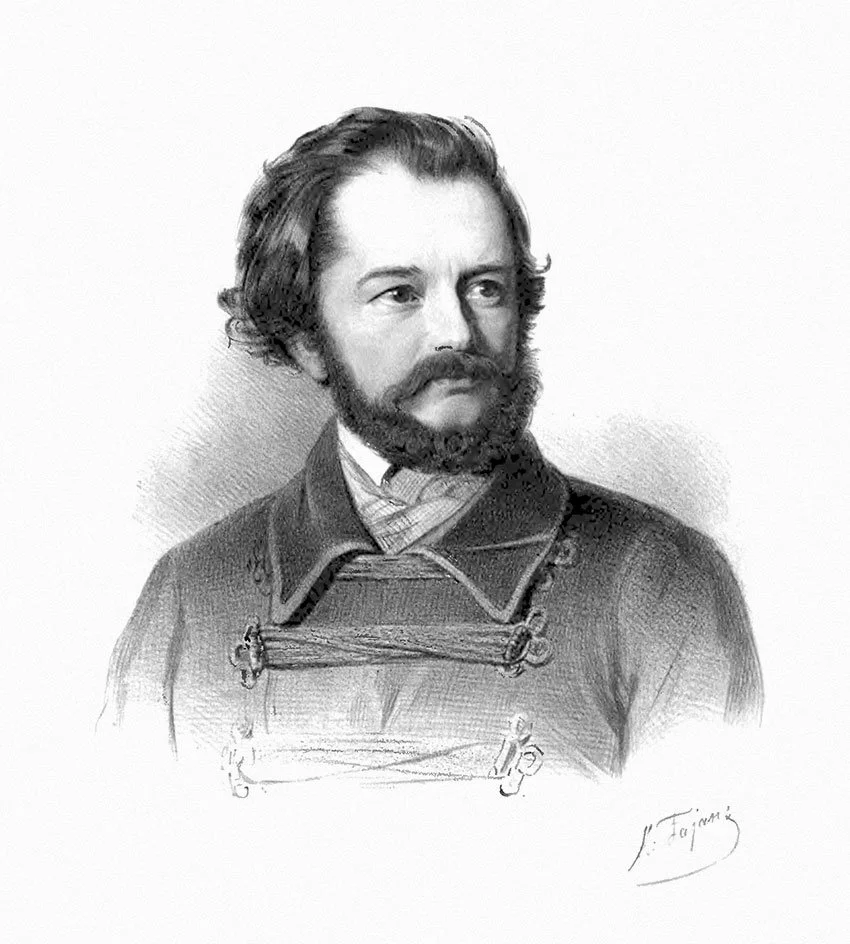
Life and Musical Career
Ignacy Feliks Dobrzyński was a Polish composer, conductor, pianist and music teacher. He grew up in a musical family and received his first lessons from his father, Ignacy Dobrzyński, who was a violinist, composer and conductor. He began composing while attending school in Vinnytsia.
In 1825, Dobrzyński moved to Warsaw, where he studied privately with Józef Elsner. From 1826 to 1828, he continued his education at the Main School of Music. Dobrzyński spent most of his professional life in Warsaw, composing, teaching piano, conducting concerts and organising musical ensembles. His reputation as a teacher led to the publication of his instructional book, School for the Piano, in 1845.
Dobrzyński’s most productive creative period was during the 1830s. His music combined the balanced forms and clarity of the Classical tradition with the emotional expression, national influences and richer musical colours of early Romanticism. He composed symphonies, operas, overtures, piano works, patriotic songs and chamber music, becoming particularly respected for his orchestral writing.
In 1845, he travelled through several European cities, including Berlin, Leipzig, Dresden, Munich and Vienna, presenting his compositions. His patriotic songs, including a setting of Adam Mickiewicz’s To a Polish Mother, temporarily prevented him from returning to Poland. He eventually returned to Warsaw in 1847.
Dobrzyński later served briefly as opera manager at Warsaw’s Grand Theatre. In 1857, he founded his own Polish Orchestra, which presented regular concerts featuring leading musicians from the Grand Theatre. As his health declined after 1860, he gradually withdrew from public musical life and concentrated on composition.
Three of his most important compositions are:
Symphony No. 2 in C Minor, Op. 15 (1831) – subtitled Symphony in the Characteristic Spirit of Polish Music, it received second prize in a Vienna composition competition in 1835.
Monbar, or the Freebooters, Op. 30 (1836–1838) – Dobrzyński’s first opera, eventually staged at Warsaw’s Grand Theatre in 1863.
String Sextet in E-flat Major, Op. 39 (c. 1841) – one of his most notable chamber works, demonstrating his skilful writing for string instruments.
Sources:
Polskie Wydawnictwo Muzyczne — Ignacy Feliks Dobrzyński: Biography.
Culture.pl, Adam Mickiewicz Institute — Ignacy Feliks Dobrzyński: Biography and Major Compositions.
International Competition of Polish Music — Ignacy Feliks Dobrzyński.