Quick Facts
Born: 2 August 1914, Łódź, Poland
Died: 17 November 1979, Palm Springs, California, United States
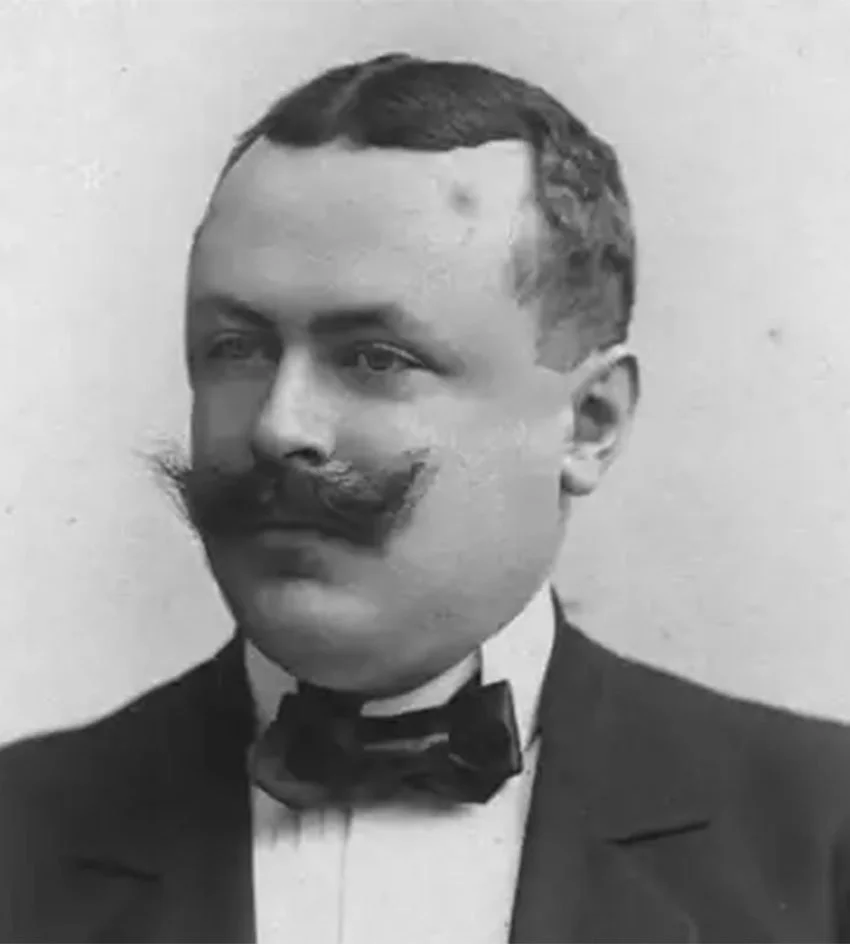
Life and Musical Career
Roman Ryterband was a Polish composer, pianist, conductor and music educator whose professional life developed across Europe and North America. Born into a Polish-Jewish family, he began writing music at the age of twelve. He studied at the State Academy of Music in Łódź but, following his father’s wishes, also completed a law degree at the University of Warsaw. Composer Alexander Glazunov encouraged him to pursue a professional career in music.
When the Second World War began in September 1939, Ryterband was travelling in Western Europe. Unable to return to occupied Poland, he found refuge in Switzerland. Despite being required to undertake agricultural labour, he continued studying musicology at the University of Bern and received awards in conducting, musicology and composition. Most of his immediate family were murdered during the Holocaust, and the experience of wartime loss influenced several of his most emotional works.
Ryterband remained in Switzerland until the mid-1950s, working as a pianist, conductor, teacher and choral director. He later moved to Montreal, where he lectured at McGill University and organised musical performances. In 1960, he joined the Chicago Conservatory College of Music. Seven years later, he settled in Palm Springs, where he continued composing, teaching and conducting and founded the annual Palm Springs Festival of Music and Art.
His music combines twentieth-century European modernism with Polish, Jewish, Swiss and other folk traditions. He composed piano cycles, chamber works, orchestral music, ballets, sacred compositions and songs. His catalogue is particularly noted for its imaginative combinations of instruments, including flute, harp, violin and piano.
Three of his most important compositions are:
Suite Polonaise (1944) – a cycle of ten piano pieces based on regional Polish dances, reflecting Ryterband’s lifelong interest in Polish folklore.
Trois Ballades hébraïques (1943–1948) – an expressive work for violin and piano, later arranged for violin and harp, shaped by Jewish musical heritage and memories of wartime tragedy.
Pièce sans titre, also known as Dialogue for Two Flutes (1952) – an imaginative chamber work that received first prize in the International Society for Contemporary Music’s Chicago composition competition in 1961.
Sources:
Polish Music Center, University of Southern California — Roman Ryterband: Biography and List of Works.
Polish Music Center, University of Southern California — Roman Ryterband: Life and Work.
Polish Music Center, University of Southern California — The Roman Ryterband Collection.