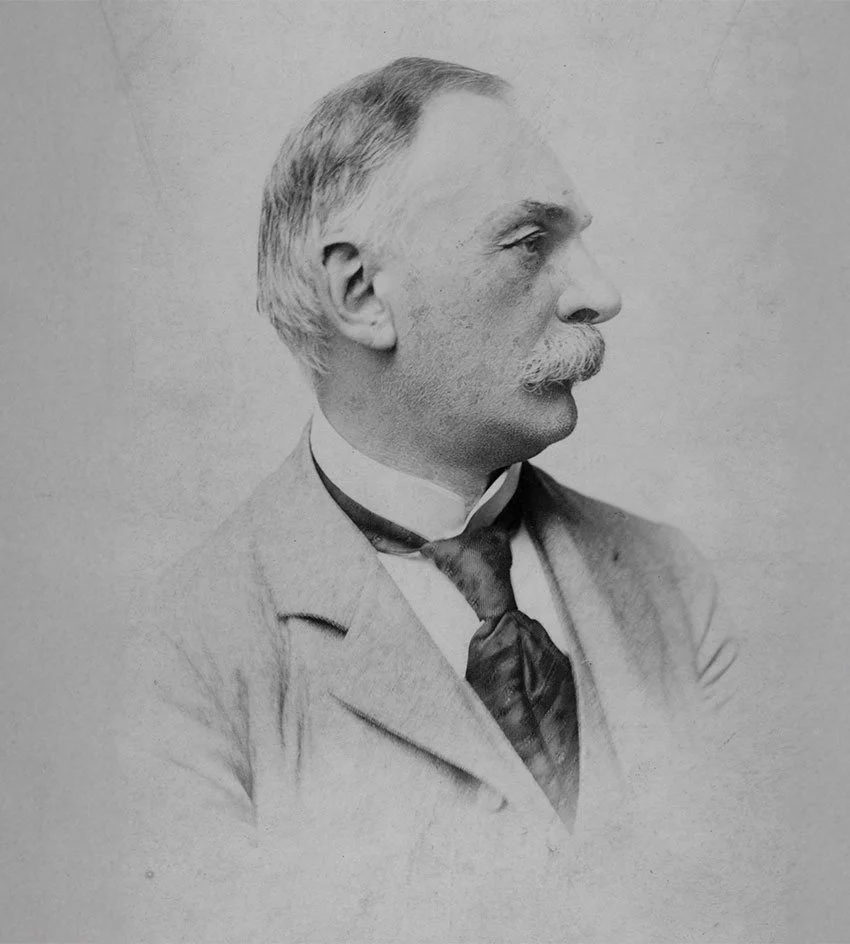
Władysław Żeleński
Quick Facts
Born: 6 July 1837, Grodkowice near Kraków, Poland
Died: 23 January 1921, Kraków, Poland
Life and Musical Career
Władysław Żeleński was a Polish composer, pianist, conductor and influential music teacher. Regarded as one of the leading representatives of Polish music after Stanisław Moniuszko, he composed four operas, cantatas, orchestral and chamber works, piano music and nearly 100 songs.
Żeleński received his early musical education in Kraków, studying piano with Kazimierz Wojciechowski and Jan Germasz and composition with Franciszek Mirecki. He also studied philosophy at the Jagiellonian University. From 1859, he continued his musical education in Prague, studying piano with Alexander Dreyschock and organ and composition with Josef Krejčí. He received a doctorate in philosophy from Charles University in 1862.
In 1866, Żeleński travelled to Paris, where he studied composition with Napoléon-Henri Reber and later privately with Bertold Damcke. After returning to Poland, he presented a concert of his own compositions in Kraków in 1871. He subsequently moved to Warsaw and became professor of harmony and counterpoint at the Institute of Music. In 1878, he was appointed artistic director of the Warsaw Music Society.
Żeleński returned to Kraków in 1881. He conducted symphonic concerts and helped establish the Conservatory of the Kraków Music Society in 1887. He directed the institution until his death and taught several notable Polish composers, including Zygmunt Stojowski and Roman Statkowski.
His music combined Romantic expression with strong compositional craftsmanship, Polish literary themes and national dance traditions. His style was influenced by Mendelssohn, Schumann, Moniuszko, Brahms and Smetana.
Three of his most important compositions are:
Goplana (1886–1891) – a three-act Romantic opera inspired by Juliusz Słowacki’s play Balladyna. It is widely considered one of Żeleński’s greatest achievements.
In the Tatra Mountains, Op. 27 (1868–1870) – a characteristic orchestral overture inspired by the landscape and atmosphere of the Tatra Mountains.
Piano Quartet in C Minor, Op. 61 – one of his most significant chamber works and among the compositions that have remained in the Polish concert repertoire.
Sources:
Culture.pl, Adam Mickiewicz Institute — Władysław Żeleński: Biography.
Polskie Wydawnictwo Muzyczne — Władysław Żeleński: Biography and Works.
Polish Music Library — Władysław Żeleński: Biography and Compositions.
International Competition of Polish Music, National Institute of Music and Dance — Władysław Żeleński.