Quick Facts
Born: 7 March 1911, Warsaw, Poland
Died: 27 September 1991, Warsaw, Poland
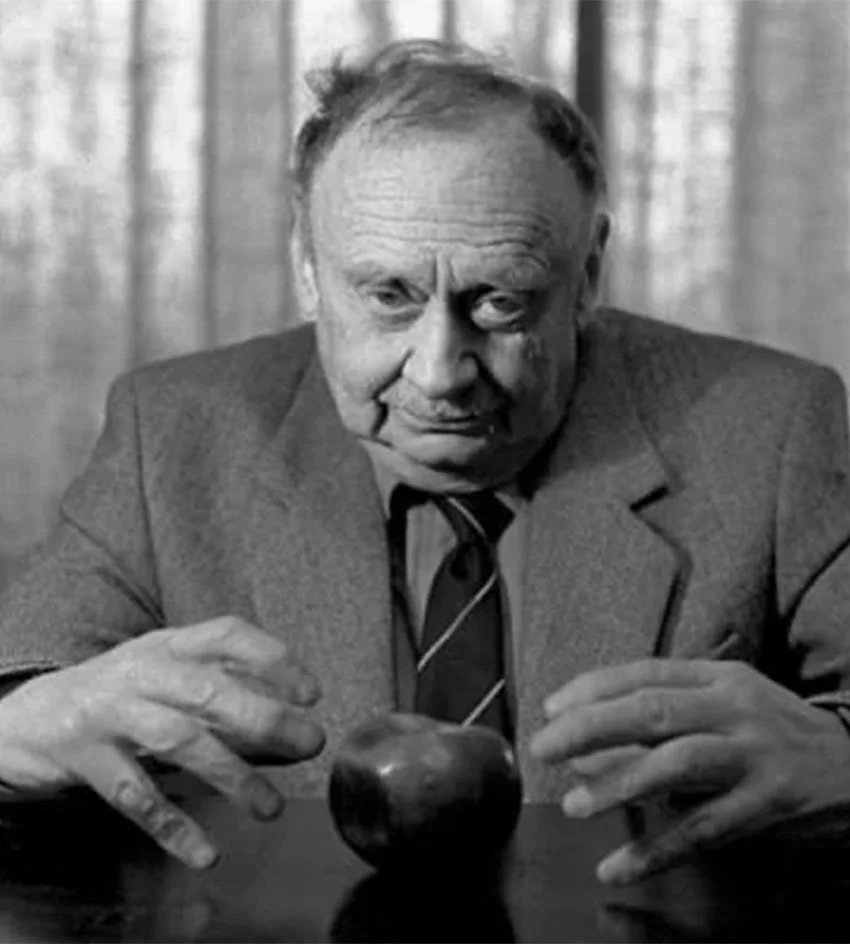
Life and Musical Career
Stefan Kisielewski was a Polish composer, pianist, music critic, writer, journalist and teacher. Known for his sharp intelligence and independent opinions, he became an important figure in Poland’s musical, literary and political life during the twentieth century.
In 1927, Kisielewski entered the Warsaw Conservatory, where he studied music theory and composition with Kazimierz Sikorski and piano with Jerzy Lefeld. He received diplomas in music theory in 1934 and in composition and piano in 1937. He also studied Polish literature and philosophy at the University of Warsaw before continuing his composition studies in Paris from 1938 to 1939.
During the German occupation of Poland, Kisielewski worked as an accompanist and music teacher and participated in Warsaw’s underground musical life. Most of his pre-war compositions were destroyed during the Warsaw Uprising. After the Second World War, he settled in Kraków, where he taught harmony, counterpoint and instrumentation at the State Higher School of Music from 1945 to 1949. He also founded the influential music journal Ruch Muzyczny and served as its first editor-in-chief.
Alongside composing, Kisielewski wrote extensively about music, culture, politics and society. He contributed a long-running column to Tygodnik Powszechny and served as a member of the Polish parliament from 1957 to 1965. His outspoken criticism of Poland’s communist authorities resulted in censorship, a temporary publishing ban and other forms of political repression.
Kisielewski remained committed to a neoclassical musical style. His compositions frequently combined traditional forms and tonality with modern dissonance, rhythmic energy, humour and irony.
Three of his most important compositions are:
Concerto for Chamber Orchestra (1949) – a lively neoclassical work that received second prize at the Festival of Polish Music in 1955.
Symphony in a Square (1974–1978) – an inventive orchestral composition demonstrating Kisielewski’s interest in clear structure and the organisation of musical form.
Piano Concerto (1980–1991) – his final composition, completed shortly before his death and regarded as one of the most significant achievements of his later career.
Sources:
Polskie Wydawnictwo Muzyczne — Stefan Kisielewski: Biography.
Culture.pl, Adam Mickiewicz Institute — Stefan Kisielewski: Life and Work.
International Competition of Polish Music, National Institute of Music and Dance — Stefan Kisielewski.