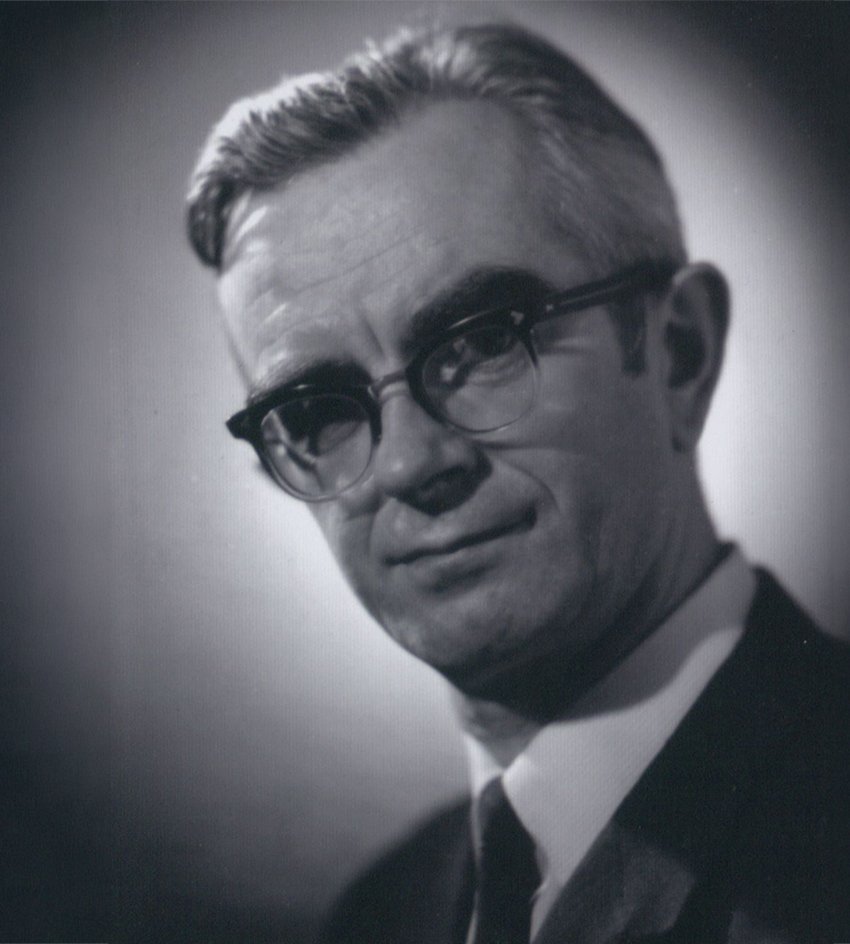
Stanisław Nawrocki
Quick Facts
Born: 30 September 1894, Sulejów, Poland
Died: 20 December 1950, Warsaw, Poland
Life and Musical Career
Stanisław Hieronim Nawrocki was a Polish composer and pianist known primarily for his piano music and concert performances. He received his earliest musical instruction from his father, Władysław Nawrocki, an opera singer and organist. After moving to Warsaw in 1908, he attended secondary school and worked as an organist under the guidance of his uncle Julian, a church musician and choral conductor.
In 1914, Nawrocki entered the Warsaw Institute of Music. He studied piano with Aleksander Michałowski and later continued his training with Antoni Sygietyński and Zbigniew Drzewiecki. His composition teachers included Roman Statkowski and Henryk Melcer. Between 1928 and 1931, he further developed his piano and composition skills under Ignacy Jan Paderewski in Switzerland and Paris.
Nawrocki began appearing publicly in 1910, performing his own piano miniatures in Warsaw. In 1919, he presented his Piano Sonata in E-flat Minor at the Warsaw Philharmonic. He later performed in Poland, France, Switzerland, the Netherlands and Spain. A major concert devoted to his compositions took place at the Warsaw Philharmonic in 1933 and included the premiere of his Piano Concerto in D Minor, dedicated to Paderewski.
He also collaborated with Polish Radio, performing concerts and composing music for radio plays. During the Second World War, Nawrocki participated in secret concerts and performed in Warsaw cafés. The manuscripts of all his compositions were destroyed during the Warsaw Uprising of 1944. After the war, he reconstructed several works and resumed giving recitals devoted to Chopin and Polish music.
Three of his most important compositions are:
Piano Sonata in E-flat Minor (1918) – a substantial early work dedicated to Poles who died during the First World War.
Piano Concerto in D Minor with Accompanying Fanfares (1929) – his principal orchestral composition, dedicated to Ignacy Jan Paderewski and premiered in Warsaw in 1933.
Twelve Mazurkas for Piano (1944) – a collection reflecting Nawrocki’s connection to Polish dance traditions, reconstructed and published after the war.
Sources:
Culture.pl, Adam Mickiewicz Institute — Stanisław Hieronim Nawrocki: Life and Work.
Polish Music Information Centre — Stanisław Hieronim Nawrocki: Biography and Compositions.
Polish Music Library — Nawrocki, Stanisław Hieronim.
Polskie Wydawnictwo Muzyczne — Stanisław Nawrocki: Biography and Works.