Roman Statkowski
Quick Facts
Born: 24 December 1859, Szczypiorno near Kalisz, Poland
Died: 12 November 1925, Warsaw, Poland
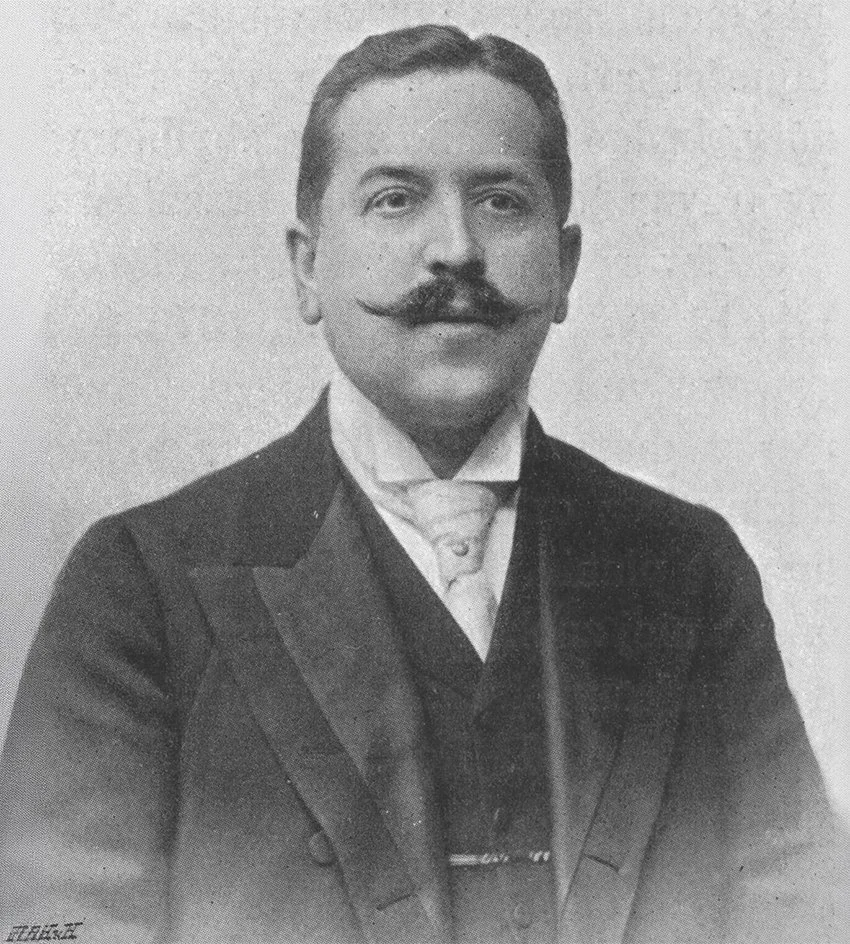
Life and Musical Career
Roman Statkowski was a Polish composer and influential music teacher whose works represent the transition between nineteenth-century Romanticism and early twentieth-century Polish music. He is remembered particularly for his operas, chamber music and piano compositions inspired by Polish dances.
Statkowski initially studied law at the University of Warsaw but abandoned it to pursue music. He studied composition with Władysław Żeleński at the Warsaw Institute of Music before continuing his education at the Saint Petersburg Conservatory. There, he studied composition with Nikolai Solovyov and instrumentation with Nikolai Rimsky-Korsakov, graduating with a gold medal in 1890.
After completing his studies, Statkowski lived and worked in Kyiv, Moscow and Saint Petersburg. In 1903, his opera Filenis received first prize at an international composition competition in London. The following year, his opera Maria, based on the narrative poem by Antoni Malczewski, also won first prize in a Warsaw competition. Its successful premiere took place at the Grand Theatre in Warsaw in 1906.
In 1904, Statkowski settled permanently in Warsaw and became a professor at the Warsaw Institute of Music. He initially taught music history and aesthetics and later directed the composition class. His students included Jan Adam Maklakiewicz, Piotr Perkowski, Bolesław Szabelski and Kazimierz Wiłkomirski. He also helped establish and edit the music journal Kwartalnik Muzyczny.
Statkowski’s music combines Romantic lyricism and traditional forms with influences from Polish dance music, Russian orchestration and German musical traditions. His catalogue includes two operas, orchestral works, six string quartets, violin compositions and approximately sixty piano pieces.
Three of his most important compositions are:
Maria (1903–1904) – a tragic three-act opera and Statkowski’s best-known large-scale work, admired for its dramatic intensity and symphonic writing.
Filenis (1897) – a three-act opera that received first prize at an international competition in London in 1903.
Alla Cracovienne in D Major, Op. 7 – a popular composition for violin and piano inspired by the lively rhythm and character of the Polish krakowiak.
Sources:
Culture.pl, Adam Mickiewicz Institute — Roman Statkowski: Biography.
Polish Music Library — Roman Statkowski: Biography and Works.
Polskie Wydawnictwo Muzyczne — Roman Statkowski: Biography.
Polish Music Heritage — Roman Statkowski: Biography and Catalogue of Works.