Karol Szymanowski
Quick Facts
Born: 3 October 1882, Tymoszówka, then part of the Russian Empire—now Tymoshivka, Ukraine
Died: 29 March 1937, Lausanne, Switzerland
Life and Musical Career
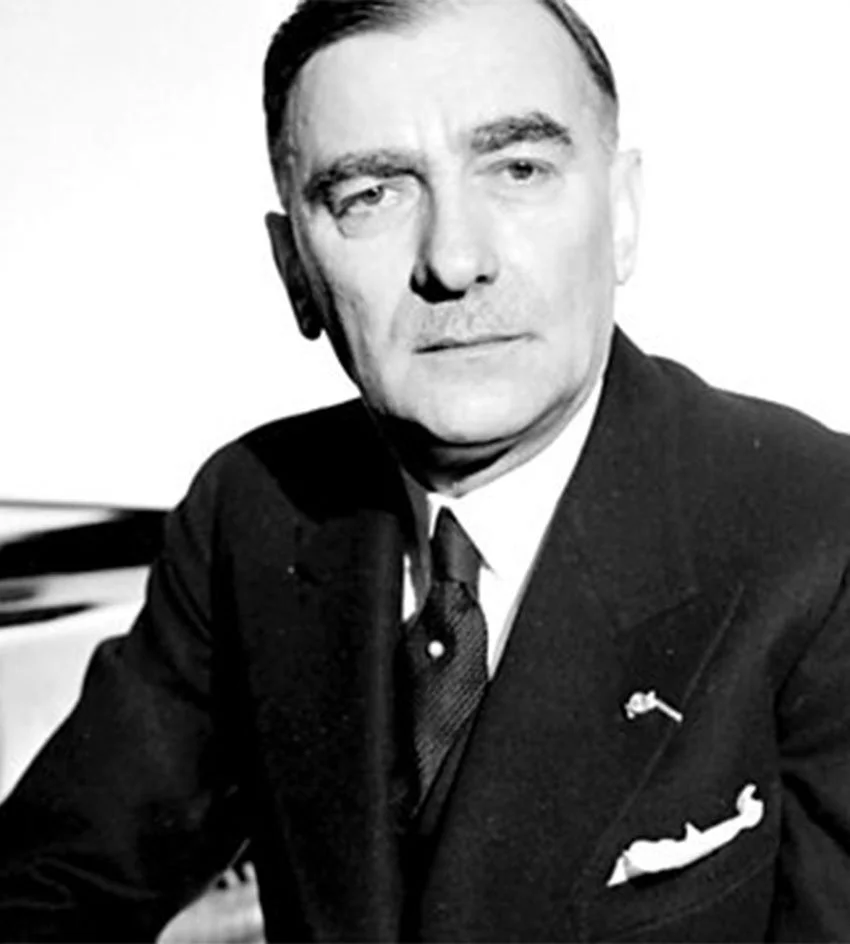
Karol Szymanowski was a Polish composer and pianist and one of the most important figures in twentieth-century Polish music. His highly individual style connected late Romanticism and European modernism with influences from ancient Mediterranean culture, Eastern poetry and Polish folk traditions.
Szymanowski grew up on his family’s estate in Tymoszówka and received his first piano lessons from his father. He later studied at Gustav Neuhaus’s music school in Elisavetgrad. From 1901 to 1905, he continued his education in Warsaw, studying harmony with Marek Zawirski and counterpoint and composition with Zygmunt Noskowski.
In 1905, Szymanowski joined Grzegorz Fitelberg, Ludomir Różycki and Apolinary Szeluto in forming the Young Poland in Music group. Its members sought to promote contemporary Polish compositions internationally and introduce new European ideas into Polish musical culture.
His early works were influenced by Richard Wagner and Richard Strauss. Following journeys to Italy, Sicily and North Africa, his music became more colourful and impressionistic, reflecting his fascination with antiquity, Islamic culture and the Mediterranean world. During the 1920s, Szymanowski increasingly turned towards Polish national traditions, particularly the music of the Tatra Highlanders.
From 1927, Szymanowski directed the Warsaw Conservatory and later served as rector of the Higher School of Music. He sought to modernise Polish musical education despite opposition from conservative circles. Poor health forced him to resign, and he spent his final years composing, performing and receiving treatment for tuberculosis. He died in a sanatorium in Lausanne and was buried in the Crypt of Merit at Skałka in Kraków.
Three of his most important compositions are:
Symphony No. 3, “Song of the Night”, Op. 27 (1914–1916) – a mystical work for solo voice, choir and orchestra based on poetry by Jalaluddin Rumi.
King Roger, Op. 46 (1918–1924) – an opera exploring the conflict between reason, faith and ecstatic freedom, inspired by Mediterranean culture and mythology.
Stabat Mater, Op. 53 (1925–1926) – a deeply expressive sacred work combining Polish language, folk-inspired elements and the character of early church music.
Sources:
Polskie Wydawnictwo Muzyczne — Karol Szymanowski: Biography and Works.
Polish Music Heritage — Karol Szymanowski: Complete Biography.
Culture.pl, Adam Mickiewicz Institute — Karol Szymanowski: Biography and Major Compositions.