Quick Facts
Born: 3 January 1884, Warsaw, Poland
Died: 24 November 1948, Poznań, Poland
Some older publications give 1885 as his year of birth; contemporary Polish Music Library and PWM sources use 3 January 1884.
Life and Musical Career
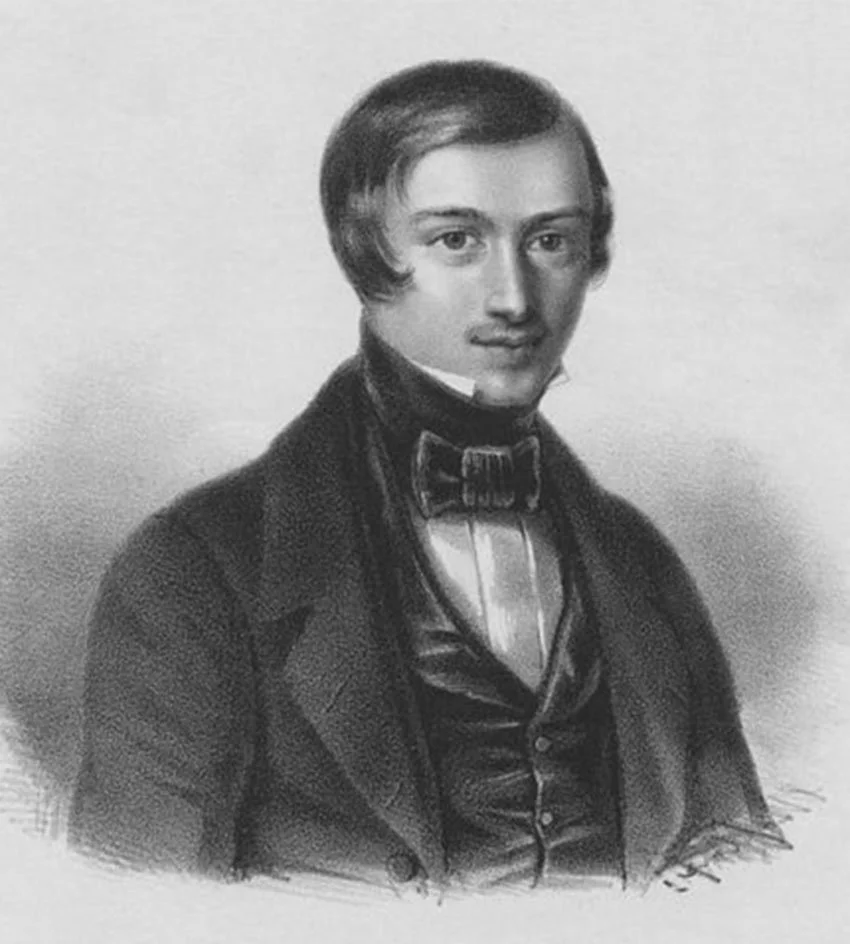
Józef Władysław Krogulski was a Polish pianist, composer, choir conductor and music teacher. Despite his short life, he created approximately 100 sacred and secular compositions and became an important figure in Warsaw’s musical life during the early Romantic period.
Krogulski was born into a family with strong musical traditions. His father, Michał Krogulski, was a pianist, organist, composer and teacher who provided his son’s earliest musical education. Józef displayed remarkable talent as a child and began performing publicly at the age of nine. In 1825, he made his Warsaw debut at the Conservatory and soon toured cities including Berlin, Dresden, Leipzig and Weimar, where he briefly studied with the celebrated pianist and composer Johann Nepomuk Hummel.
In 1828, Krogulski settled permanently in Warsaw and enrolled at the Main School of Music. He studied composition and music theory with Karol Kurpiński and Józef Elsner, who was also Fryderyk Chopin’s teacher. His early music reflected the brilliant piano style popular at the time, combining virtuoso passages, decorative melodies and elements of Polish folk and patriotic music.
After the school closed following the November Uprising, Krogulski supported himself by teaching piano. He also established free singing schools and directed church choirs in Warsaw. These activities inspired him to compose masses, hymns, cantatas, songs and large-scale religious works. His music combined Classical forms with Romantic expression, Polish texts and traditional melodies.
Krogulski suffered from tuberculosis and died in Warsaw at only 26 years of age. He was buried at Powązki Cemetery.
Three of his most important compositions are:
Piano Concerto No. 1 in E Major (1830) – a brilliant and lyrical work premiered by Krogulski at Warsaw’s National Theatre during the November Uprising.
La bella Cracovienna, Op. 1 – a fantasy and variations for piano based on Polish musical themes, demonstrating his youthful virtuosity and national style.
Miserere in E Minor (1841) – a large-scale Good Friday oratorio and Krogulski’s most important sacred composition.
Sources:
Polskie Wydawnictwo Muzyczne — Józef Władysław Krogulski: Biography.
Polish Music Heritage — Józef Krogulski: Complete Biography.
International Competition of Polish Music — Józef Władysław Krogulski.