Quick Facts
Born: 13 February 1882, Podgórze, near Kraków—now part of Kraków, Poland
Died: 26 January 1948, Sydney, Australia
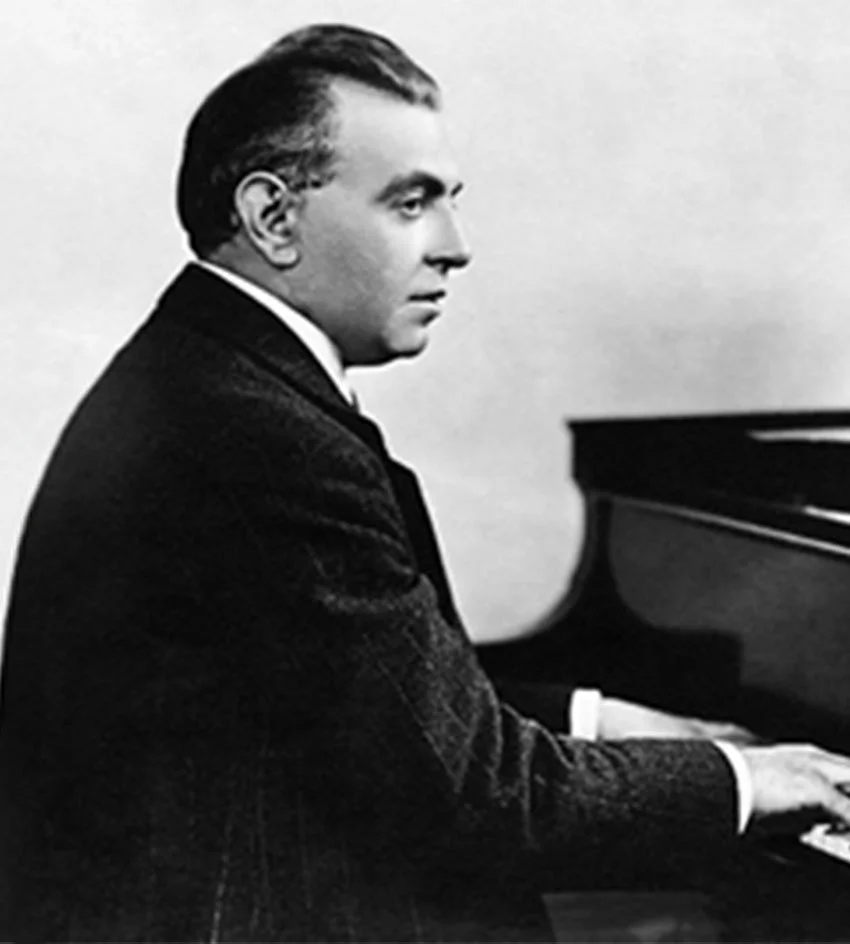
Life and Musical Career
Ignacy Friedman was a Polish pianist, composer, teacher and music editor. Born Salomon Izaak Freudmann into a musical family, he received his earliest lessons from his father, a violinist and clarinettist in a theatre orchestra. He later studied piano with Flora Grzywińska in Kraków and made his first public appearance in 1896.
In 1900, Friedman travelled to Leipzig to study composition with Hugo Riemann. He subsequently moved to Vienna, where he studied piano with the renowned teacher Theodor Leschetizky and musicology with Guido Adler at the University of Vienna. His highly acclaimed Viennese debut took place in 1904 and featured piano concertos by Brahms, Tchaikovsky and Liszt.
Friedman became one of the leading piano virtuosos of the early twentieth century. During a concert career spanning more than four decades, he performed throughout Europe, North and South America, Asia, Africa, Australia and New Zealand. He was particularly admired for his interpretations of Chopin, especially the mazurkas, and frequently collaborated with leading musicians, including Pablo Casals, Bronisław Huberman, Carl Flesch and Emanuel Feuermann.
Alongside his performing career, Friedman composed more than 80 numbered works. His output included piano miniatures, mazurkas, waltzes, studies, songs, transcriptions and chamber music. His compositions combined Romantic lyricism, Polish dance rhythms, refined piano writing and the elegant character of European salon music. He also prepared important editions of works by Chopin, Liszt and Schumann and taught several notable pianists.
During the Second World War, Friedman travelled to Australia for a concert tour and settled permanently in Sydney. A condition affecting his left hand forced him to retire from public performance in 1943. He remained in Australia until his death in 1948.
Three of his most important compositions are:
Piano Quintet in C Minor (1918) – his most substantial chamber composition, combining sweeping Romantic melodies with dramatic and richly textured writing for piano and strings.
Six Viennese Dances after Themes by Eduard Gärtner – a colourful and elegant piano cycle inspired by the Viennese waltz tradition.
Passacaglia, Op. 44 – an ambitious solo piano work demonstrating Friedman’s command of variation, counterpoint and virtuoso keyboard technique.
Sources:
National Library of Poland — Ignacy Friedman: Biography.
International Competition of Polish Music, National Institute of Music and Dance — Ignacy Friedman.
POLIN Museum of the History of Polish Jews — Ignacy Friedman.
Hyperion Records — Friedman and Różycki: Piano Quintets.