Quick Facts
Born: 5 February 1909, Łódź, Poland
Died: 17 January 1969, Warsaw, Poland
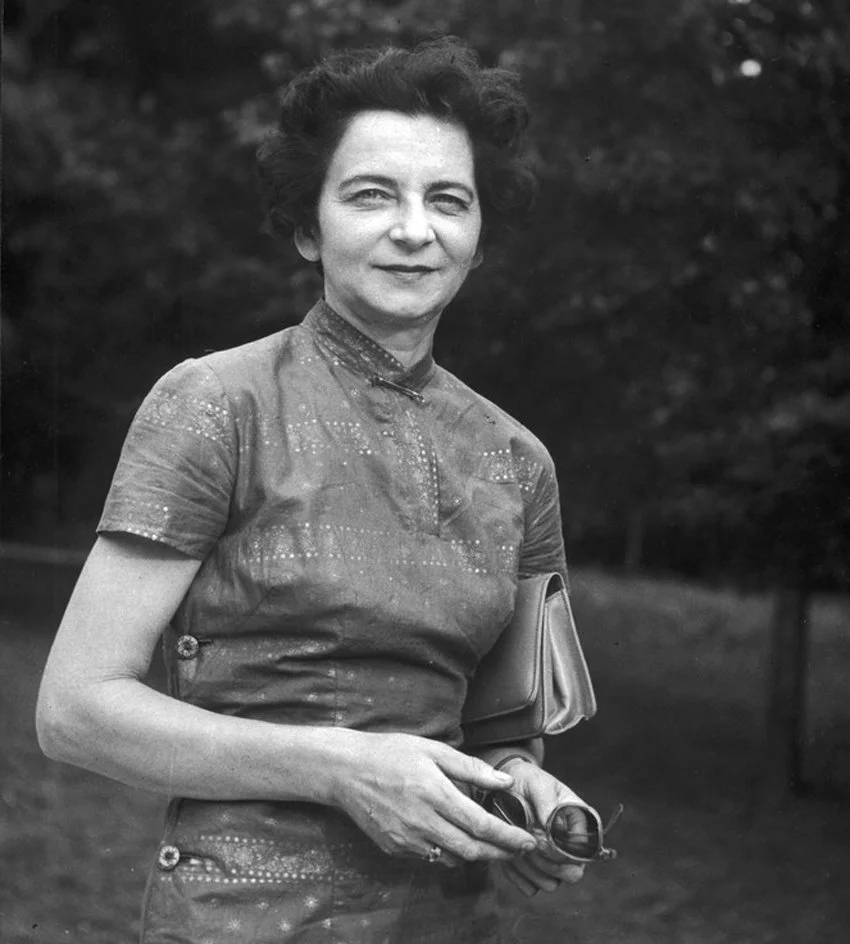
Life and Musical Career
Grażyna Bacewicz was one of the leading Polish composers and violinists of the twentieth century. Raised in a musical family, she began learning violin, piano and music theory from her father at the age of five. She gave her first public concert at seven and started composing during her early teenage years.
Bacewicz studied composition, violin and piano at the Warsaw Conservatory, graduating in 1932. She later continued her education in Paris, where she studied composition with the influential teacher Nadia Boulanger and violin with André Touret and Carl Flesch. These experiences helped shape her early neoclassical style, characterised by clear structures, energetic rhythms and exceptional writing for string instruments.
During the 1930s, Bacewicz developed a successful career as a concert violinist and served as principal violinist of the Polish Radio Orchestra under conductor Grzegorz Fitelberg. During the Second World War, she remained in Warsaw, continued composing and performed in private underground concerts. After the war, she taught at the State Conservatory in Łódź and resumed her international musical activities.
From the early 1950s, particularly following a serious car accident in 1954, Bacewicz increasingly devoted herself to composition. In 1966, she became a professor of composition at the State Higher School of Music in Warsaw. She also held an important position within the Polish Composers’ Union.
Bacewicz created a large and varied body of work, including symphonies, seven violin concertos, seven string quartets, piano compositions, ballets, songs and music for theatre, film and radio. Her musical language gradually developed from neoclassicism and Polish folk influences towards a more modern and experimental use of harmony, rhythm and instrumental colour.
Three of her most important compositions are:
Concerto for String Orchestra (1948) –
one of her best-known works, celebrated for its energy, rhythmic vitality and masterful string writing. It received Poland’s National Prize in 1950.
String Quartet No. 4 (1951) – an important contribution to twentieth-century chamber music, awarded first prize at the International String Quartet Competition in Liège.
Music for Strings, Trumpets and Percussion (1958) – one of her greatest orchestral achievements, awarded first prize in the orchestral category at UNESCO’s International Rostrum of Composers in 1960.
Through her achievements as a composer, performer and teacher, Bacewicz became an internationally recognised figure and a pioneering presence for women in twentieth-century European classical music.
Sources:
Polskie Wydawnictwo Muzyczne — Grażyna Bacewicz: Biography.
Polish Music Center, University of Southern California — Grażyna Bacewicz: Biography and List of Works.
Cambridge University Press — Grażyna Bacewicz: The “First Lady of Polish Music”.