Emil Młynarski
Quick Facts
Born: 18 July 1870, Kibarty near Suwałki—now Kybartai, Lithuania
Died: 5 April 1935, Warsaw, Poland
Life and Musical Career
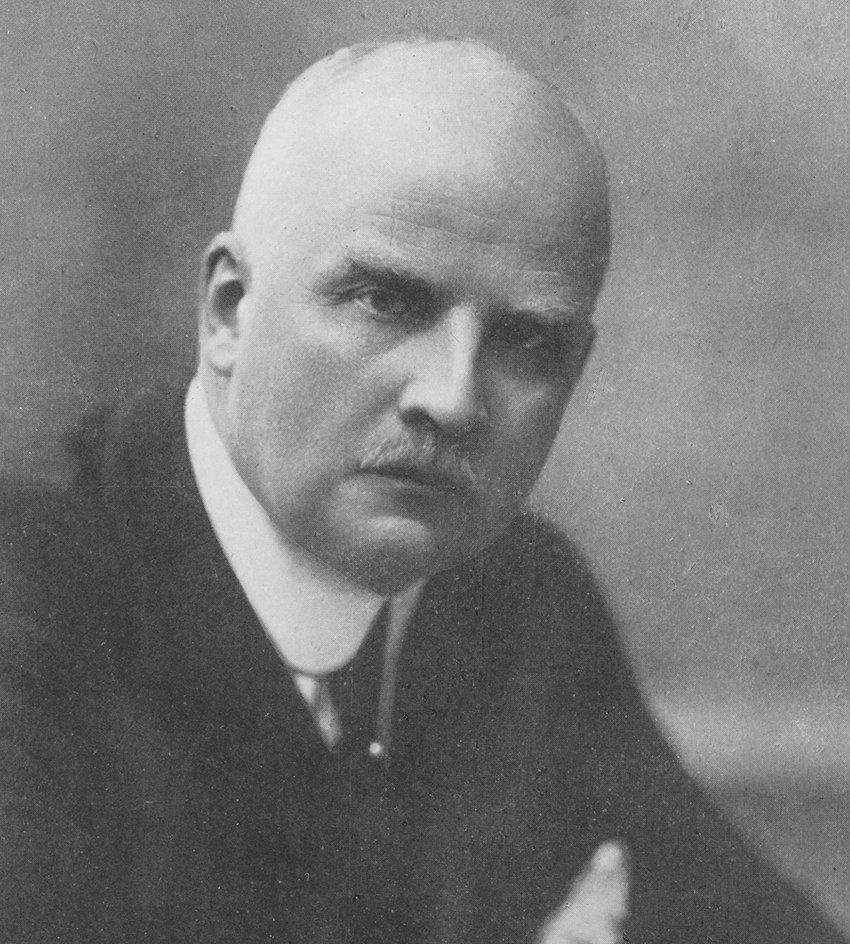
Emil Młynarski was a Polish composer, violinist, conductor and teacher. He is remembered particularly as the first Polish conductor to achieve a major international reputation and as one of the principal founders of the Warsaw Philharmonic.
At the age of ten, Młynarski entered the Conservatory of the Imperial Music Society in Saint Petersburg. He studied violin with Leopold Auer, composition with Anatoly Lyadov and instrumentation with Nikolai Rimsky-Korsakov. After graduating with honours in 1889, he briefly performed with Auer’s string quartet and the conservatory’s symphony orchestra before beginning an international career as a violin soloist.
In 1894, Młynarski became a violin professor and conductor at the Imperial Music Society’s school in Odessa. He later moved to Warsaw, where his successful performance of Bizet’s Carmen led to his appointment as conductor and musical director of the Warsaw Opera.
Młynarski played an essential role in establishing the Warsaw Philharmonic. He became its first director and conductor and led its inaugural concert on 5 November 1901, with Ignacy Jan Paderewski appearing as soloist. He later conducted orchestras in Britain, Russia, Europe and the United States. He also directed the Warsaw Conservatory and Warsaw Opera and served at Philadelphia’s Curtis Institute of Music.
His compositions belong mainly to the late-Romantic tradition and feature lyrical melodies, colourful orchestration, Polish dance rhythms and technically demanding violin writing.
Three of his most important compositions are:
Violin Concerto No. 2 in D Major, Op. 16 – widely regarded as his finest composition, combining a brilliant solo part with rich orchestral writing and expressive melodies.
Symphony in F Major, “Polonia”, Op. 14 – a large-scale patriotic symphony incorporating references to the medieval hymn Bogurodzica and rhythms of Polish dances.
Mazur in G Major, Op. 7, No. 1 – his most popular violin miniature, known for its energetic character, virtuosity and distinctive Polish dance rhythm.
Sources:
Polish Music Library — Emil Młynarski: Biography, Literature and Compositions.
Culture.pl, Adam Mickiewicz Institute — Emil Młynarski: Biography and Major Compositions.
Polish Music Heritage — Emil Młynarski: Biography and Catalogue of Works.