Quick Facts
Born: 5 May 1819, Ubiel near Minsk—now Ubel, Belarus
Died: 4 June 1872, Warsaw, Poland
Life and Musical Career
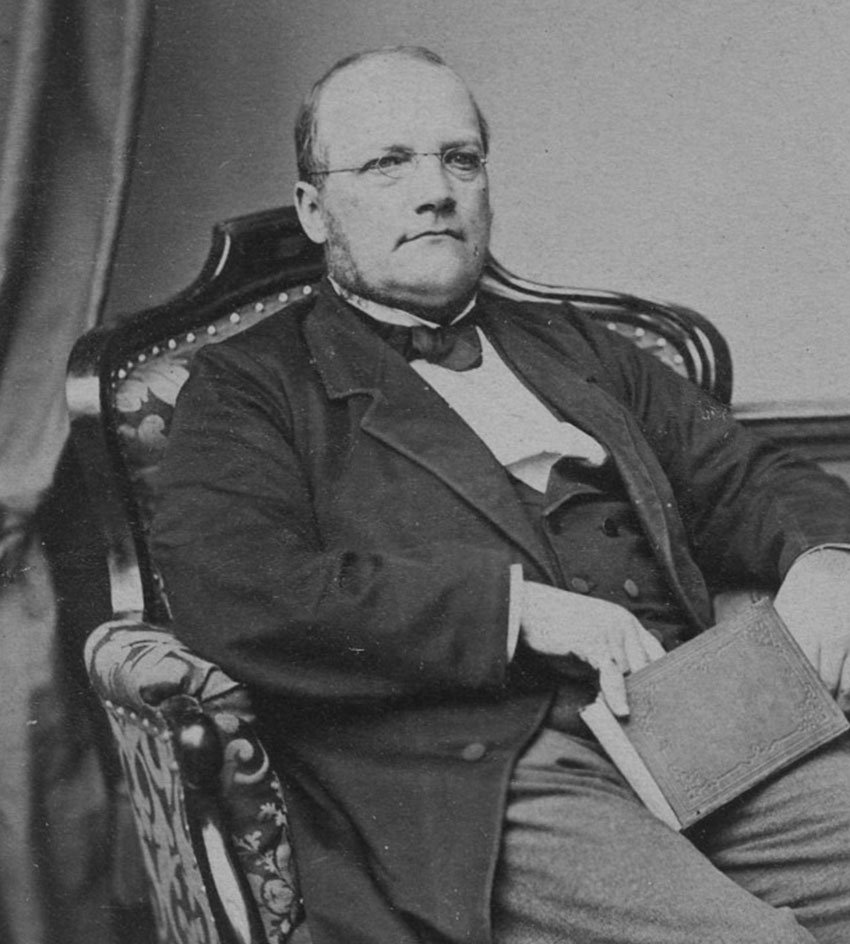
Stanisław Moniuszko was a Polish composer, conductor, organist and teacher, widely regarded as the father of Polish national opera. His music combined European Romantic traditions with Polish folk melodies, dances, literature and patriotic themes.
Moniuszko received his first music lessons from his mother before studying piano in Warsaw and Minsk. In 1837, he travelled to Berlin, where he studied harmony, counterpoint, instrumentation and conducting with Carl Friedrich Rungenhagen. During this period, he developed a strong interest in opera, choral music and settings of Polish poetry.
In 1840, Moniuszko settled in Vilnius, where he worked as an organist at St John’s Church, taught music and organised choirs and orchestral performances. The first two-act version of his opera Halka was staged there in 1848. Its expanded four-act version premiered in Warsaw on 1 January 1858 and achieved enormous success. Later that year, Moniuszko was appointed principal conductor of Polish opera at the Grand Theatre in Warsaw.
Moniuszko composed operas, operettas, ballets, cantatas, sacred works, orchestral music and hundreds of songs. His songs, published in collections titled Śpiewnik domowy (Home Songbook), set poems by important Polish writers and were intended for performance in private homes. Their lyrical and patriotic character helped preserve Polish language and national identity during a period when Poland did not exist as an independent state.
Three of his most important compositions are:
Halka (1848; revised 1858) – a tragic opera about the betrayal of a young highland woman, recognised as a foundational work of Polish national opera.
The Haunted Manor (Straszny dwór, 1865) – a comic opera combining romance, humour, Polish dances and patriotic values. Its Warsaw premiere was received with great enthusiasm.
Home Songbooks (Śpiewniki domowe, published from 1844) – a major collection of songs for voice and piano that established a new direction for Polish national song.
Moniuszko died suddenly of a heart attack in Warsaw. His funeral at Powązki Cemetery became a major national demonstration honouring his contribution to Polish culture.
Sources:
Culture.pl, Adam Mickiewicz Institute — Stanisław Moniuszko: Biography.
Polskie Wydawnictwo Muzyczne — Stanisław Moniuszko: Biography.